
What Is an Industrial Blower and What Is It Used For?
An industrial blower is equipment designed to move air or gas at the airflow, and pressure required to support an industrial process. Industrial blowers are used in applications such as pneumatic conveying, water and wastewater treatment, aeration, material handling, combustion air, and cooling.
The blower supplies the air or gas that allows the process to operate. What that air accomplishes, and how much airflow or pressure the process requires depends on the application.
Gardner Denver offers several industrial blower technologies, including bi-lobe, tri-lobe, twisted tri-lobe and helical screw designs. Because industrial applications have different operating requirements, there is no single blower technology that is appropriate for every process. Selection should begin with the application, required airflow, pressure or vacuum and operating conditions.
So, what is a blower:
Quick answer: An industrial blower moves air or gas to provide the airflow and pressure needed by an industrial process. Common uses include pneumatic conveying, wastewater aeration, material handling, combustion air and cooling. Selecting an appropriate blower begins with understanding what the process requires.
What Does an Industrial Blower Do?
An industrial blower creates and maintains the movement of air or gas required by a process. Depending on the application, that airflow may be used to:
- Move bulk materials through a pneumatic conveying system
- Supply air to water and wastewater treatment processes
- Aerate or fluidize materials
- Support combustion
- Cool equipment or process materials
- Recover or move gas
- Assist with material handling
The blower is not usually the process itself. Instead, it provides the airflow and pressure that enable the process to work. For example, a blower used for wastewater aeration must support a different process than a blower used to move dry material through a conveying line. The applications may use the same general category of equipment, but their system requirements can be very different.
A useful starting question is:
What must the air or gas accomplish in this process?
The answer helps define the application requirements and the blower technologies that should be evaluated.
What Are Industrial Blowers Used For?
Industrial blowers support processes across water and wastewater treatment, cement, milling, bulk material handling, food production, pharmaceuticals, chemicals, plastics, power generation and other industries.
Two common industrial blower applications are water and wastewater treatment and pneumatic conveying.
Water and Wastewater Treatment
Water and wastewater treatment processes use air at several stages.
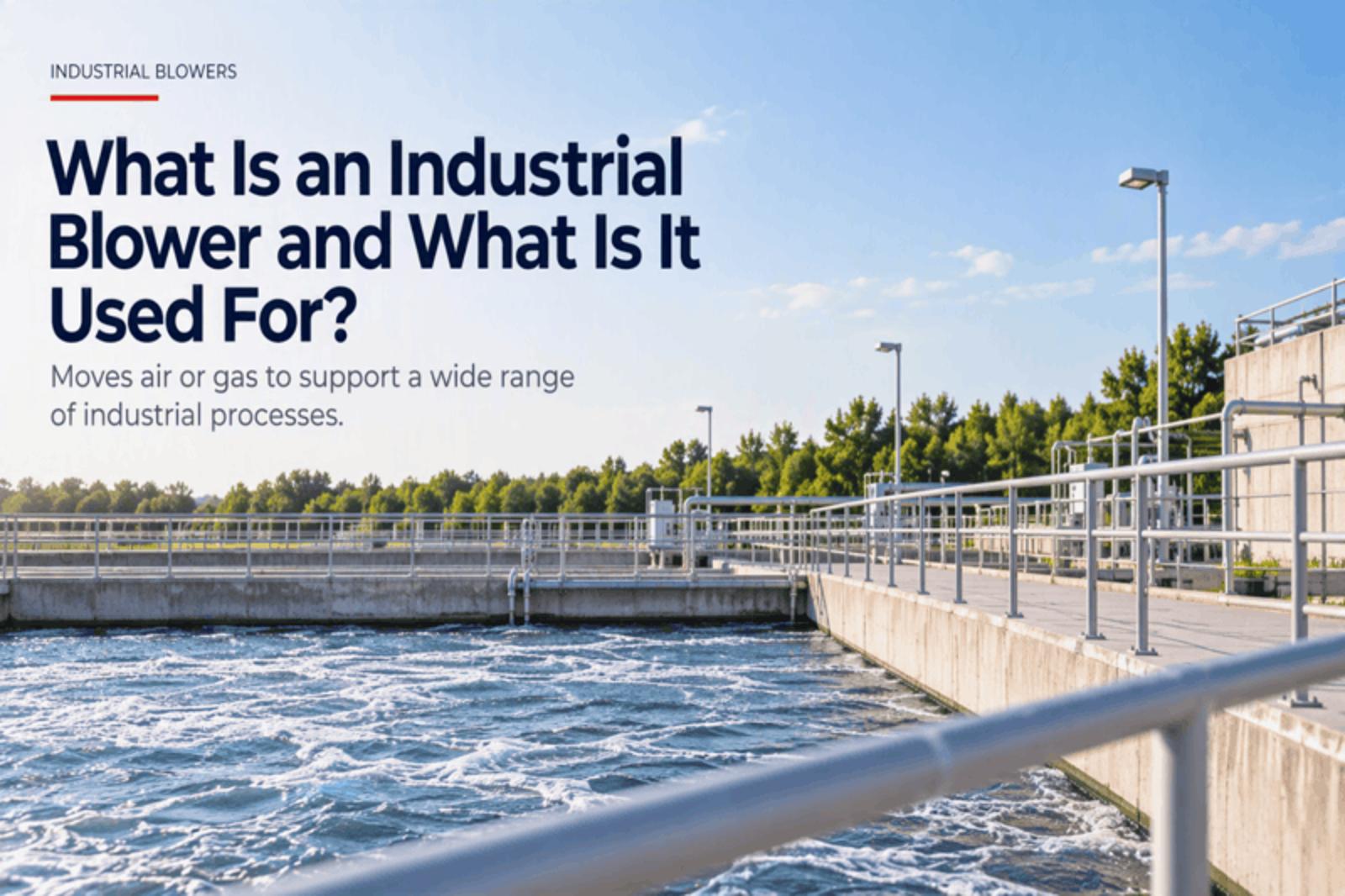
In channel aeration, air is introduced through diffusers into tanks containing wastewater. The resulting bubbles increase dissolved oxygen levels. Air can also be used during filter backwash to expand the filter bed and break up compacted material so that loosened particles can be removed.
Other blower applications in water and wastewater treatment include grit aeration and aerobic digestion. The requirements of each process, including airflow, pressure and operating conditions, help determine the equipment that should be evaluated.

Pneumatic Conveying
Pneumatic conveying systems use moving air to transport dry materials through a conveying system.
These systems are used in industries and processes involving cement and lime, fly ash, food ingredients, resins and plastics, pharmaceuticals, chemicals and other bulk materials.
The characteristics of the material and the conveying system matter when evaluating blower requirements. Gardner Denver conveying resources distinguish among dilute-, semi-dense- and dense-phase conveying, demonstrating why the material, conveying approach, capacity and operating conditions must be understood before selecting equipment.

Other Industrial Applications
Industrial blowers also support processes such as:
- Aeration
- Fluidization
- Combustion air
- Burner feeding
- Cooling
- Gas recovery
- Milling
- Bulk material handling
The answer to what is a blower and what specific role it fills depends on the process it supports. A blower should therefore be evaluated as part of the complete application and system rather than as an isolated piece of equipment.
What Is a Positive Displacement Blower?
Positive displacement is a term readers often encounter when researching industrial blowers. It describes an operating principle rather than one individual blower design. Positive displacement blowers move a defined volume of air or gas by trapping it and transferring it from the inlet side of the blower to the discharge side. Technologies such as rotary lobe and screw blowers can be explored in more detail through Gardner Denver's dedicated positive displacement and blower-technology resources.
Technologies such as rotary lobe and screw blowers can be explored in more detail through Gardner Denver's dedicated positive displacement and blower-technology resources.
What Should You Consider When Selecting an Industrial Blower?
Blower selection should begin with the process rather than a particular blower model. Defining the following requirements can help narrow the technologies and equipment that should be evaluated.
1. Application
Start by defining what the blower must accomplish.
A blower supplying air to a wastewater-treatment process performs a different role from one moving dry material through a pneumatic conveying system.
Ask:
What role does air or gas play in the process?
The answer establishes the context for the rest of the selection process.
2. Required Airflow
Determine how much airflow the application requires at its intended operating point.
Different blower technologies and sizes have different documented airflow capabilities. Defining the process requirement helps narrow the available equipment choices.
3. Pressure or Vacuum
Identify the pressure or vacuum conditions that the process must support.
The equipment should be evaluated against the requirements of the actual application and operating point rather than selected from a general technology description alone.
4. Operating and System Conditions
Consider the conditions the blower will encounter within the complete system.
Relevant conditions may include the process configuration, conveyed material, operating environment and expected duty. In pneumatic conveying, for example, the conveying approach and material requirements affect the overall system evaluation.
5. Blower Technology
Once the application, airflow, pressure or vacuum and operating conditions are understood, the available blower technologies can be evaluated against those requirements.
This initial review is not a substitute for detailed sizing or application engineering. It provides the information needed to begin a more focused equipment evaluation.

Frequently Asked Questions About Industrial Blowers
The word “blower” can refer to different types of equipment. In an industrial setting, it generally refers to equipment used when a process requires air or gas movement at defined airflow and pressure conditions. This could mean supplying air to an aeration process, creating airflow for conveying material, or supporting another process need.
Find the Right Blower for Your Application
Understanding the role of an industrial blower is the first step. The next is defining what your process requires.
Gardner Denver offers multiple industrial blower technologies for a range of applications. Explore the available technologies to understand your options, or use the Gardner Denver Blower Selection Guide to learn more about the factors involved in blower selection.
Reach Out to Us