
Rotary Lobe Blowers: Working Principle, Types, Applications & Comparison
Rotary lobe blowers are positive displacement machines that deliver reliable, oil-free airflow across a wide range of industrial applications. This article explains the rotary lobe blower working principle, explores the differences between bi-lobe, tri-lobe, and twisted tri-lobe designs, and compares their performance characteristics related to noise, pulsation, and operating efficiency.
Gardner Denver Rotary Lobe Blower Packages and How They Work
Industrial teams rely on equipment that delivers steady airflow, simple installation, and predictable performance. Bare blowers often create extra work. They produce higher noise levels, limit maintenance access, and lack filtration or monitoring. Gardner Denver rotary lobe blower packages address these issues by providing a complete system built for long operating hours and consistent output.
Rotary Lobe Blower Working Principle
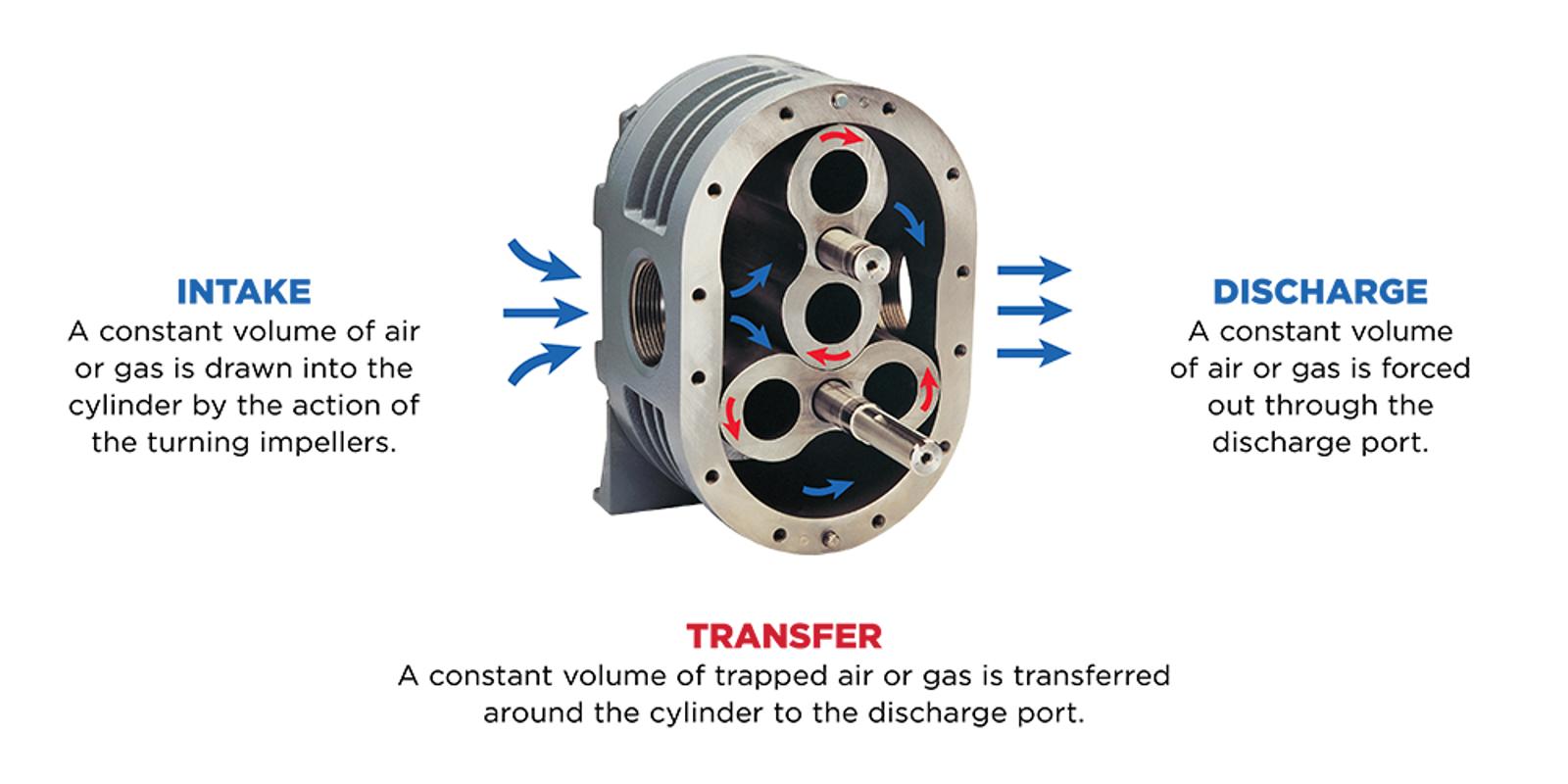
A rotary lobe blower uses two synchronized rotors that turn in opposite directions. As the lobes separate at the inlet, air fills expanding cavities. Rotation carries the trapped air toward the outlet. Pressure rises when the downstream system limits flow.
The oil‑free compression path supports continuous operation and identifies the design as a positive displacement blower. The fixed displacement provides steady airflow even as system conditions shift. Bi‑lobe, tri‑lobe, twisted tri‑lobe, and Roots‑style blowers operate on this same principle.
Why Rotary Lobe Blower Packages Matter
Bare blowers require custom integration, which increases installation time and adds risk. Packaged rotary lobe systems reduce that work by including filtration, silencing, and monitoring in one engineered setup. Operators gain a stable platform that supports long service life and faster troubleshooting.
Key advantages include:
- Integrated layout matched to intended flow and pressure
- Inlet filtration that supports equipment life
- Lower airborne noise through enclosure design
- Monitoring options that help identify issues earlier
- Standardized access points for routine service
Rotary Lobe Blower Types and Model Options
Gardner Denver offers bi‑lobe, tri‑lobe, and twisted tri‑lobe designs. Each handles pulsation and noise differently and suits specific operating environments.
Bi‑Lobe Blowers
Suited for long‑running applications that require steady flow at low to moderate pressures.
Models:
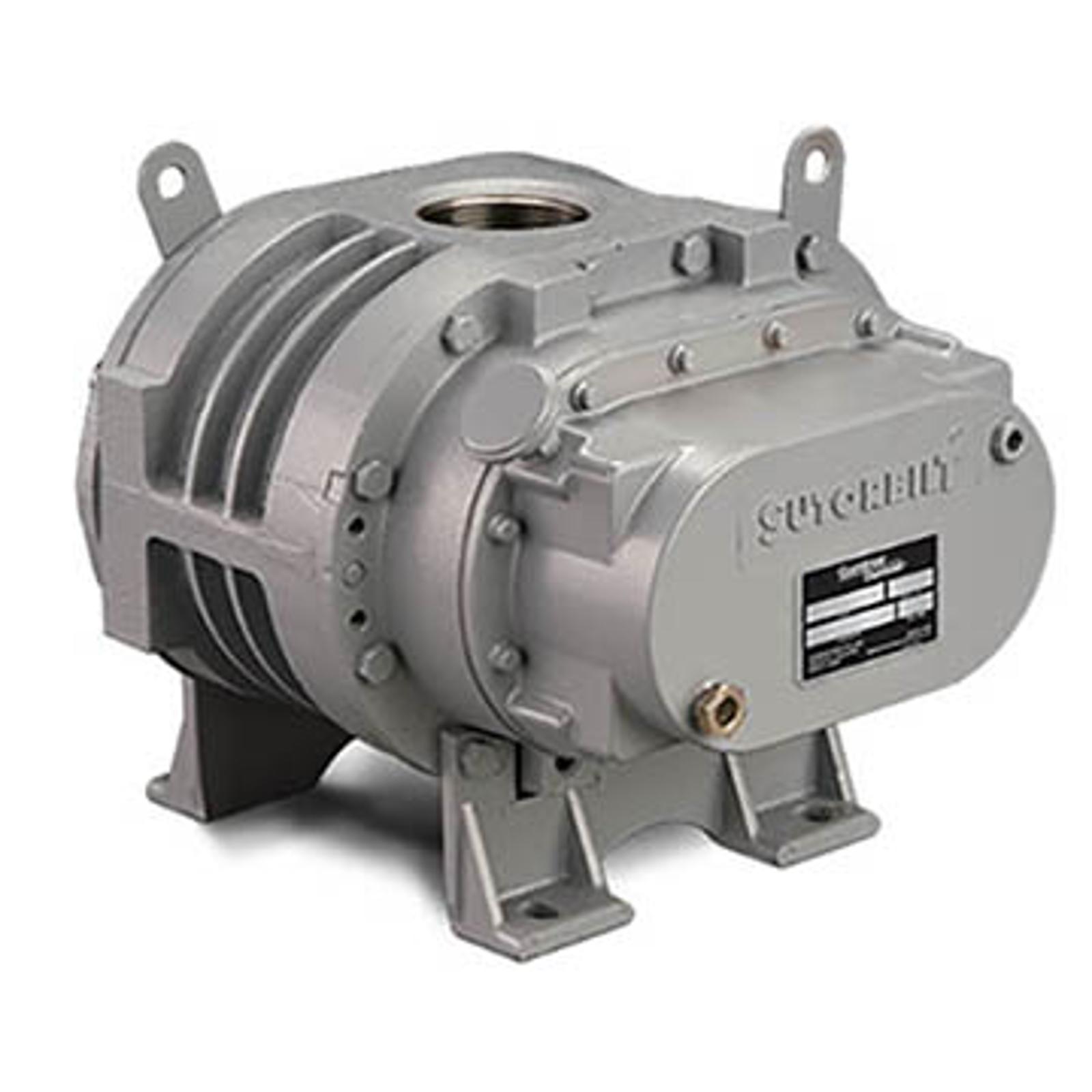
- Sutorbilt Legend: Steel drive shaft, Viton seals, twenty sizes, flexible mounting
- Sutorbilt Legend DSL and Gas Pumps: Viton seals, timing and locking design, ribbed housing, dual splash lubrication
- Sutorbilt 4500 Series: Ductile iron impellers, precision timing gears, high‑strength build, updated case design
- Sutorbilt 8000 Series: Balanced ductile iron impellers, splash lubrication, chrome alloy shafts, multiple accessories
- DuroFlow Series: Heavy‑duty configuration, oil‑free air, dual splash lubrication
Straight Tri-Lobe Blowers
Designed for applications where reduced pulsation and vibration are priorities.
Models:
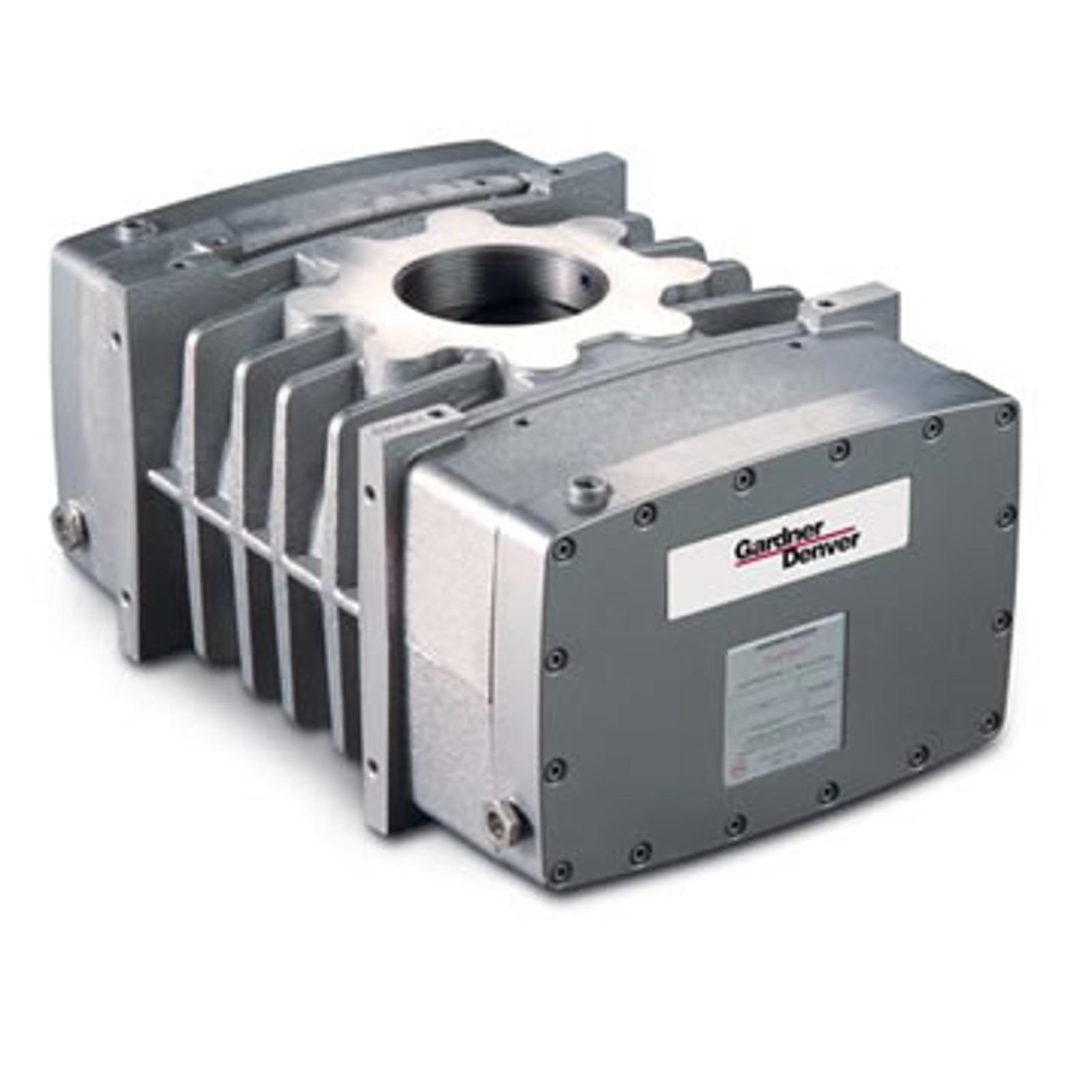
- Tri-Lobe Legend Series: provides low‑pulsation airflow with straight tri‑lobe rotors and a rugged design suited for continuous-duty industrial work
- RBS Series: Piston ring and lip seals, flexible installation, dual splash lubrication, accessory options
- TriFlow Series: Internal feedback porting, high‑strength timing gears, flexible installation
- GD-DV Blowers: Handles gas and vapor, vacuum up to 93% (28" Hg), injection air‑cooled design
Twisted Tri‑Lobe Blowers
Used where vibration limits, indoor layouts, or operator comfort require lower pulsation levels.
Models:
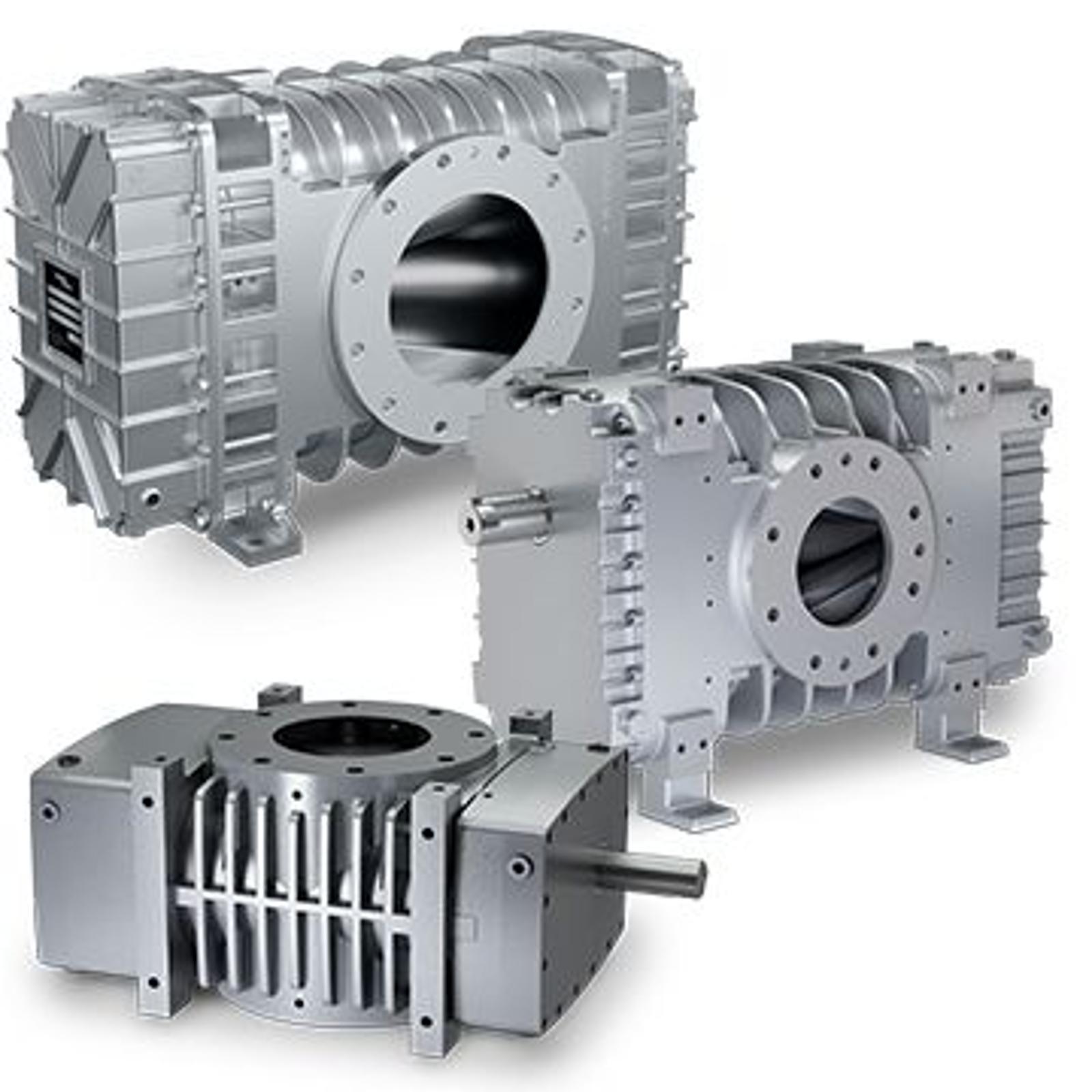
- Heliflow Series: Helical tri‑lobe rotors, dual splash lubrication, tuned port layout
Where Rotary Lobe Blowers Are Used
Rotary lobe blowers support applications that depend on steady, repeatable airflow, including:
- Wastewater aeration
- Pneumatic conveying
- Industrial processing
- Plant vacuum or pressure support
- Aquaculture
Bi-Lobe vs Tri-Lobe Blower Comparison
Bi-lobe and tri-lobe blowers are both rotary lobe blower technologies, but each offers different performance characteristics.
Feature | Bi-Lobe Blower | Tri-Lobe Blower |
|---|---|---|
Rotor Design | Two-lobed rotors | Three-lobed rotors |
Design Strength | Simple, proven design | Smooth operating design |
Noise Level | Typically higher than tri-lobe | Typically lower than bi-lobe |
Pulsation | Typically higher | Typically lower |
Common Use | General industrial applications | Wastewater, process air and continuous-duty applications |
Value | Strong option for durable, cost-effective operation | Strong option where smoother, quieter operation is preferred |
When to Choose a Bi-Lobe Blower
A bi-lobe blower may be the right choice when the application requires proven performance, durable construction and a cost-effective solution for industrial air movement.
When to Choose a Tri-Lobe Blower
A tri-lobe blower may be the better choice when reduced pulsation, lower noise and smoother operation are important to the application.
When to Choose a Twisted Tri-Lobe Blower
A twisted tri-lobe blower may be preferred for applications that need lower pulsation, quieter performance and robust continuous operation.
Rotary Lobe Blower Applications
Rotary lobe blowers are used across many industries because they provide consistent airflow and dependable performance.
Wastewater Treatment
In wastewater treatment, rotary lobe blowers are commonly used for aeration. They help supply air to support biological treatment processes and can be used in municipal and industrial wastewater systems.
Pneumatic Conveying
Rotary lobe blowers are widely used in pneumatic conveying systems to move dry bulk materials through a pipeline. Common applications include powders, pellets, grains, cement and other bulk materials.
Food and Beverage Processing
Rotary lobe blowers can support process air and conveying applications in food and beverage environments where reliable air movement is required.
Chemical Processing
Chemical processing facilities use rotary blowers for air and gas handling applications that require durable equipment and consistent performance.
Cement and Bulk Material Handling
Rotary lobe blowers are commonly used to move bulk materials in cement, minerals and other heavy-duty industrial processes.
Industrial Vacuum
Some rotary lobe blower designs can be used for vacuum applications, helping remove, transfer or handle air and gases in industrial systems.
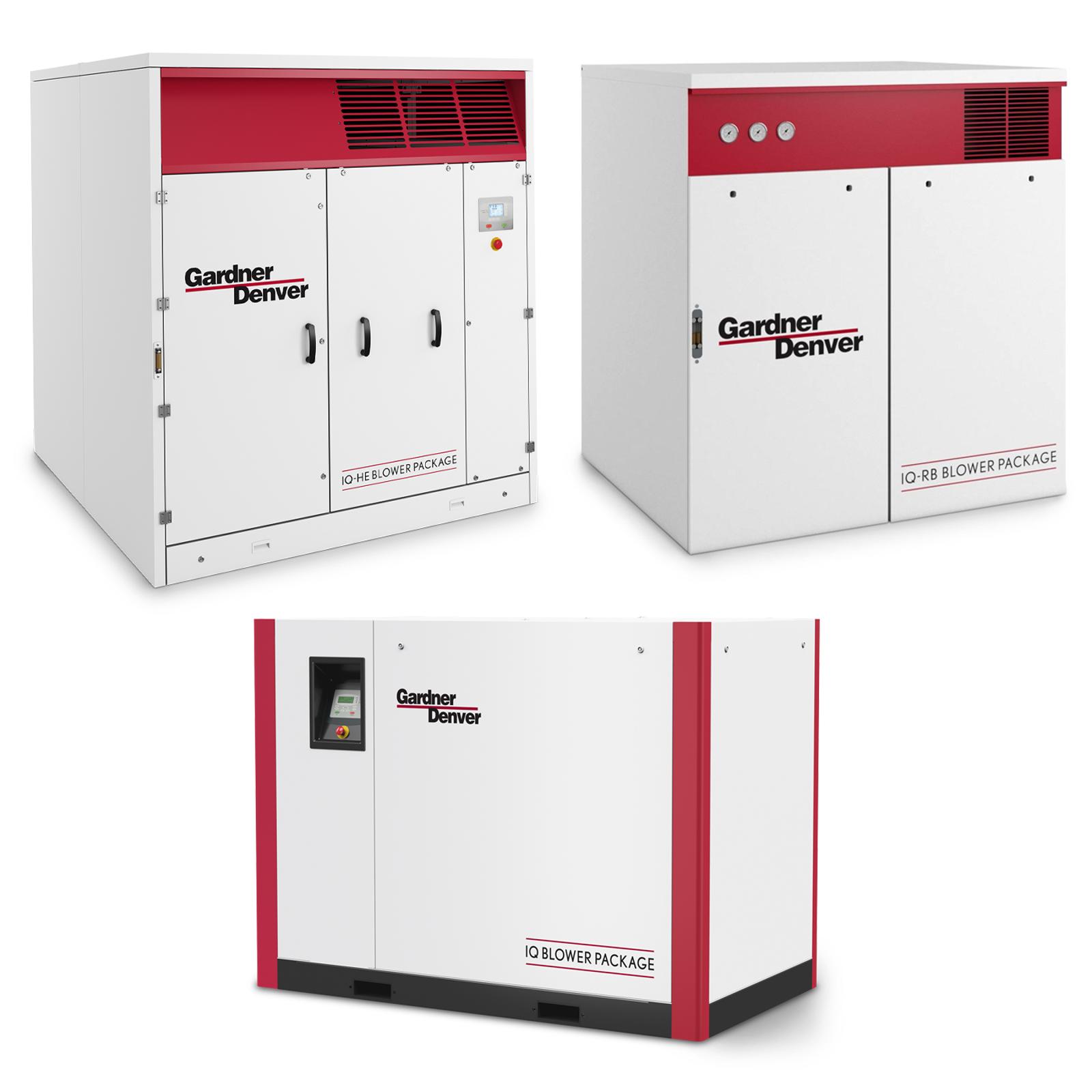
Gardner Denver Blower Packages
Designed to simplify blower system implementation, Gardner Denver blower packages combine blowers, drives, controls, enclosures, and supporting components into a single integrated solution. The result is a more efficient path from specification to commissioning, helping engineers and operators reduce risk while maintaining reliable performance.
Designed for facilities needing a compact, quiet package with minimal setup requirements.
- Tunable inlet filter and silencer
- Noise enclosure
- Fixed‑speed configuration
- Mechanical gauges
- Small footprint
Built for operators who need more insight into equipment status.
- Integrated monitoring
- Remote visibility options
- Removable discharge silencer
- Pressure and vacuum ports
- Simple tie‑in points
Created for higher‑pressure installations without increasing footprint demands.
- Up to 36psi
- Compact layout
- High and low‑pressure variants
- Tunable inlet filter and silencer
Frequently Asked Questions
A positive displacement blower that moves a fixed volume of air using synchronized rotors.
Reach Out to Us