
Choosing the Right Compressed Air Filter for Your System
Dependable performance starts with clean air. At Gardner Denver, we know your operation can't afford contamination, downtime, or guesswork. Compressed air filters are the first line of defense against the dust, oil, and moisture that quietly wear down equipment and drive up costs. This guide breaks down how air filtration works, the types of filters available, and how to choose the right one, so your system stays protected, productive, and ready for whatever the day brings.
Why Compressed Air Filtration Matters
Every compressed air system pulls in more than just air. Ambient dust, hydrocarbon vapors, water vapor, and even microscopic oil aerosols travel through your intake and settle into your lines, tools, and end-use equipment. Without proper filtration, those contaminants don't just sit there - they cost you.
Unfiltered or under-filtered compressed air can:
• Shorten equipment lifespan by accelerating wear on valves, cylinders, and pneumatic tools
• Increase energy costs as clogged components force your compressor to work harder
• Cause unexpected downtime through corrosion, product contamination, and premature part failure
• Compromise product quality in industries where air comes into contact with the final product
• Put compliance at risk in food, beverage, pharmaceutical, and electronics environments governed by ISO 8573-1 air quality standards
Reliable filtration safeguards your investment, minimizes disruption, and gives your team one less thing to worry about.
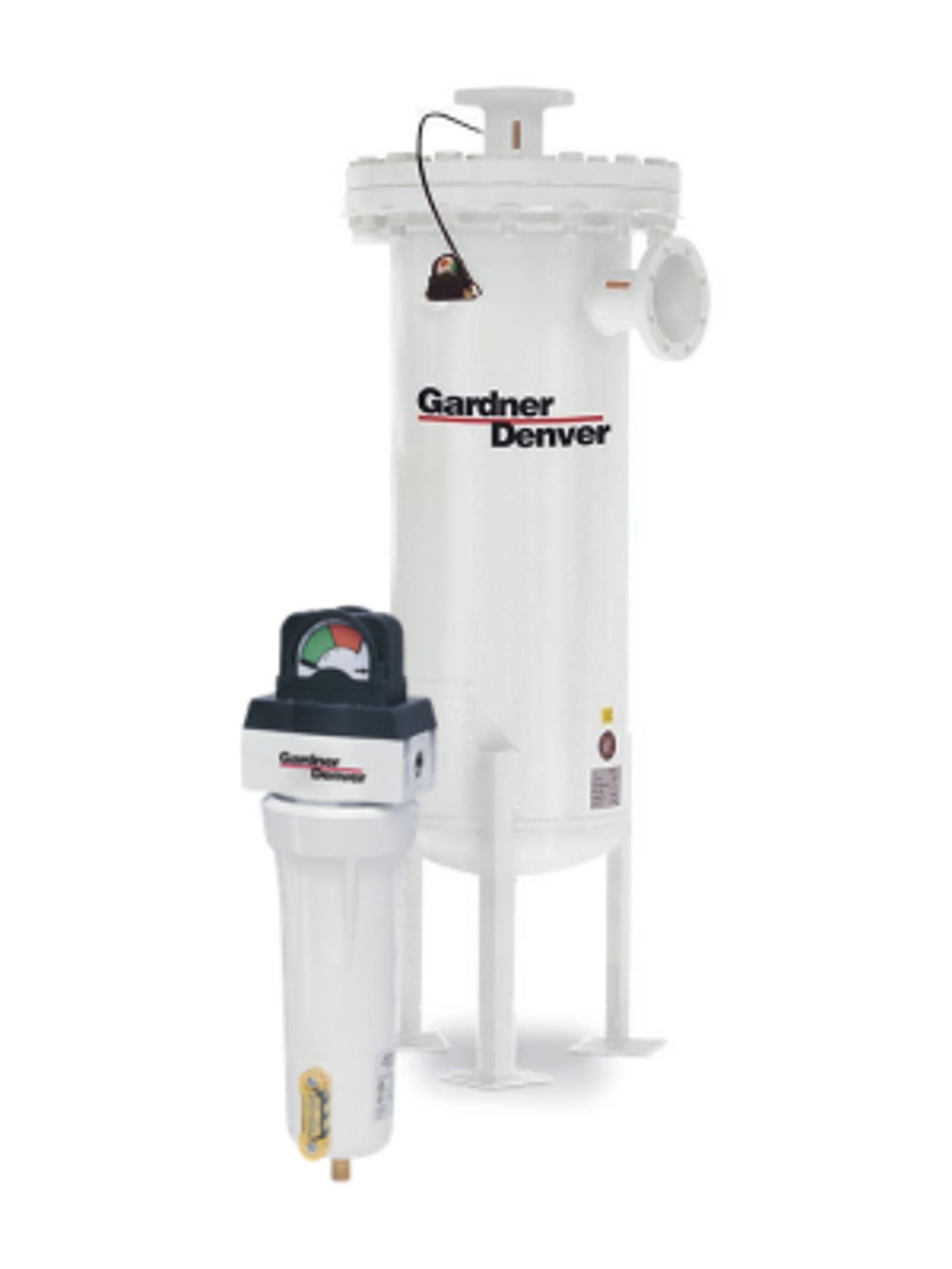
The Three Core Types of Compressed Air Filters
Not every air filter does the same job. Understanding what each one removes and where it belongs in your system is the first step to building a filtration strategy that holds up under real-world conditions.
1. Particulate Filters
Particulate filters capture solid contaminants like dust, rust flakes, pipe scale, and airborne debris. They're the workhorse of general-purpose filtration and are typically installed downstream of dryers to catch desiccant fines and other solids before they reach your tools or processes.
- Best for: General manufacturing, automotive shops, assembly lines
- Typical removal: Solid particles down to 1 micron (and finer, depending on grade)
2. Coalescing Filters
Coalescing filters are engineered to remove oil aerosols, water aerosols, and fine submicron particulates by causing tiny droplets to merge (coalesce) into larger ones that drain away. They're essential anywhere lubricated compressors are in use, or where downstream equipment is sensitive to oil carryover.
- Best for: Lubricated rotary screw and reciprocating compressor systems, heavy-duty industrial applications, instrumentation air
- Typical removal: Oil aerosols and particulates down to 0.01 micron in high-efficiency grades
Available sub-types:
- General Purpose G Grade (0.1 micron): Ideal for dryer pre-filtration, removing bulk liquid contaminants and protecting downstream equipment.
- High Efficiency H Grade (0.01 micron): Designed for post-filtration applications where higher air quality is required, removing finer oil aerosols and particulates.
3. Activated Carbon Filters
Activated carbon filters use adsorption to remove oil vapors, hydrocarbon odors, and taste-affecting contaminants that coalescing filters can't catch. When air purity is non-negotiable, carbon is the final polish.
- Best for: Food and beverage production, pharmaceutical manufacturing, electronics, breathing air, packaging
- Typical removal: Oil vapors to 0.003 mg/m³ or lower
Air Filter Types and Applications at a Glance
Filter Type | Removes | Best For |
|---|---|---|
Particulate Filter | Dust, rust, solid debris | General manufacturing, automotive |
Coalescing Filter | Oil aerosols, fine dust | Lubricated compressors, heavy-duty systems |
Activated Carbon Filter | Oil vapors, odors | Food & beverage, pharma, electronics |
How to Choose the Right Compressed Air Filter for Your System
The right filter, or more often, the right combination of filters depends on three key factors:
Application Requirements
What does your end-use demand? A body shop running impact tools has very different needs than a bottling line or a pharmaceutical cleanroom. High-purity industries typically require multi-stage filtration: particulate, coalescing, and carbon working together to hit ISO 8573-1 air quality classes.
Compressor Type
Oil-lubricated compressors carry a higher risk of oil carryover, so coalescing and carbon filters are usually non-negotiable. Oil-free systems still need particulate and coalescing filters to manage moisture, wear particles, and ambient contamination.
Operating Conditions
Harsh environments, high humidity, dusty facilities, and extreme temperatures demand robust filter housing, higher-capacity elements, and more frequent monitoring. Proven, purpose-built filtration is the difference between a system that lasts and one that's constantly being nursed back to life.
Signs It's Time to Change Your Air Filter
Filters don't fail loudly they fail gradually, and the cost shows up in your utility bill and your downtime log before it shows up on a gauge. Watch for:
- A noticeable pressure drop across the filter housing
- Moisture or oil appearing at point-of-use tools or drops
- Shortened service intervals on downstream equipment
- Product contamination or quality complaints
- Reaching the manufacturer's recommended service interval, typically every 12 months for elements, sooner in demanding environments
- Dryers with integrated filters recommend every 6 months or 4000 hours, whichever is earlier.
A proactive replacement schedule almost always costs less than a reactive one.
Why Choose Gardner Denver Air Filters?
Gardner Denver has built its reputation on showing up with equipment that performs, and people who stand behind it. Our compressed air filtration solutions are designed for operations that can't afford to stop.
- Proven Performance: Tested and engineered for demanding, real-world conditions
- Trusted Local Service Support: Fast, responsive help from distributors who know your system and your industry
- Enduring Reliability: Long-service-life elements that protect your equipment and your bottom line
- Full-System Compatibility: Filters engineered to work seamlessly with Gardner Denver compressors, dryers, and downstream accessories
We're not here to over-engineer or chase trends. We're here to make sure your air stays clean, your system stays running, and your team never feels left on its own.
Frequently Asked Questions
Most filter elements should be replaced every 12 months, or sooner if you notice a pressure drop, oil bleed-through, or you're operating in a high-contamination environment. For dryers with integrated filters, we recommend every 6 months or 4000 hours, whichever is earlier.
Keep Your Operations Running
Ready to protect your system with filtration you can count on? Contact your local Gardner Denver distributor for expert guidance and dependable solutions built to keep your operations running.
Reach Out to Us