
What Causes Blower Pressure Pulsation? How HeliFlow® Helps Reduce Noise
Pressure pulsation is one of the primary contributors to noise in positive displacement blower systems. As trapped pockets of air enter the discharge stream, they create pressure fluctuations that can produce sound, flow variation, and pulsation-related stress elsewhere in the air system.
For engineers and plant operators, the objective is not simply to make a blower quieter. It is to maintain dependable airflow while managing the pressure pulses that can affect the broader system. HeliFlow® technology addresses this challenge with a proprietary helical tri-lobe rotor profile and triangular tuned ports designed to reduce pulsation and discharge noise.

How Pressure Pulsation Causes Blower Noise
Positive displacement blowers generate airflow by trapping and moving pockets of air through the blower housing. As these air pockets are released into the discharge stream, pressure fluctuations occur. These pressure fluctuations, known as pulsation, are a primary contributor to blower-generated noise.
Pulsation can also affect the broader air system. Excessive discharge pulsation can create greater flow variation and increase stress on blower components and downstream equipment such as valves and instrumentation.
Reducing the severity of these pressure pulses can therefore contribute to quieter operation while helping protect components throughout the air system.
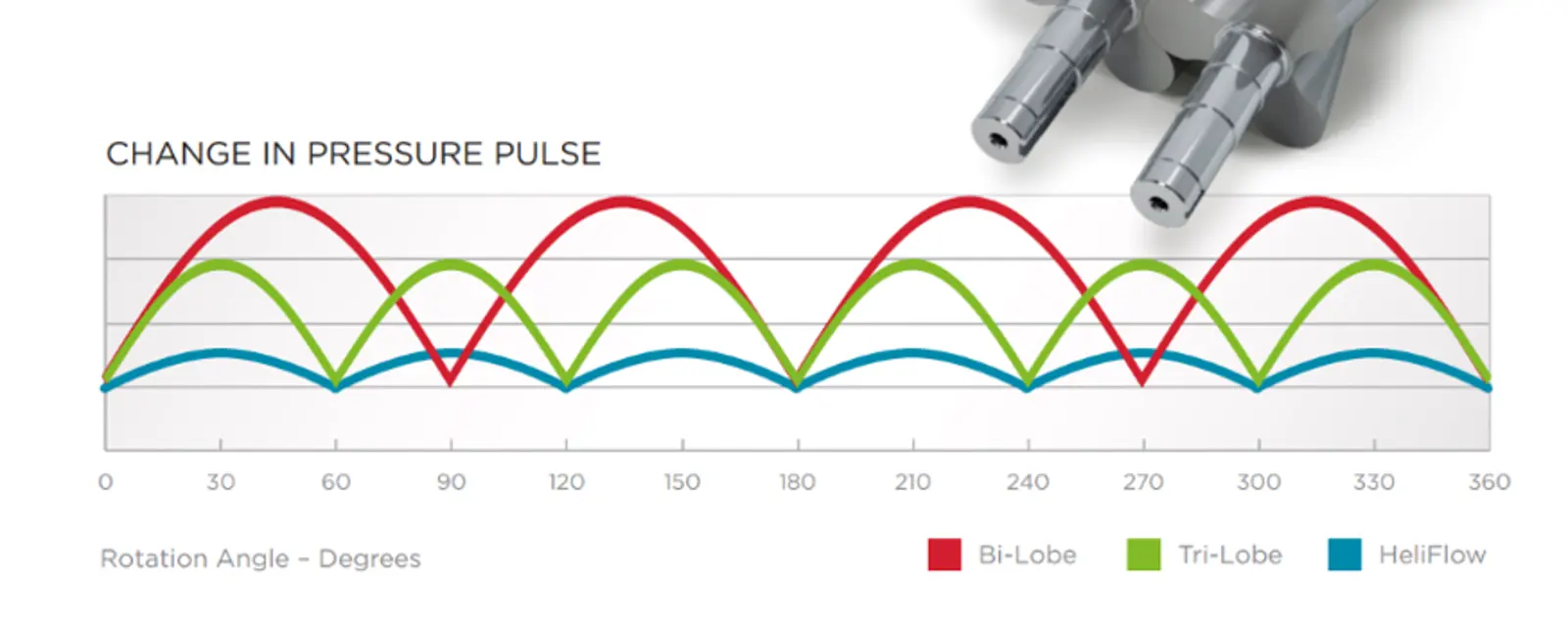
How Rotor Design Reduces Pressure Pulsation
Traditional straight-lobe blower designs discharge air in a series of distinct pressure pulses. Gardner Denver HeliFlow® Industrial Series blowers take a different approach, using a proprietary helical tri-lobe rotor profile and triangular tuned ports to reduce discharge pressure pulsation.
The helical rotor profile helps create a smoother pressure-pulse pattern, reducing pulsation and discharge noise compared with similarly sized straight-lobe blowers. Gardner Denver HeliFlow® product literature documents noise reductions of 4 to 7 dBA compared with similarly sized straight-lobe blowers.
The difference is not simply how much air the blower moves, but how the pressure pulses are generated throughout its rotation. By reducing pressure-pulse severity, HeliFlow® delivers smoother flow variation and quieter operation.
Pressure Pulsation Comparison: Bi-Lobe, Straight Tri-Lobe and HeliFlow
Design | Pressure-Pulse Characteristic | Noise Characteristic |
|---|---|---|
More distinct pressure pulses | Higher pulsation-related noise | |
Reduced pulsation compared with bi-lobe | Lower pulsation-related noise | |
Smoother pressure-pulse pattern | 4–7 dBA lower than similarly sized straight-lobe blowers |
*Based on Gardner Denver HeliFlow design characteristics and published comparisons showing reduced pressure pulsation and noise levels relative to similarly sized straight-lobe blower designs.
How Reduced Pulsation Supports the Air System
The benefits of reduced pulsation extend beyond sound levels. HeliFlow® provides more consistent flow variation, helping reduce the potential for damage to downstream valves and instrumentation.
Discharge pressure pulsation can also create axial thrust and variations in torque that contribute to reduced bearing life. HeliFlow® smooth-pulse operation helps address these effects while supporting longer blower life.
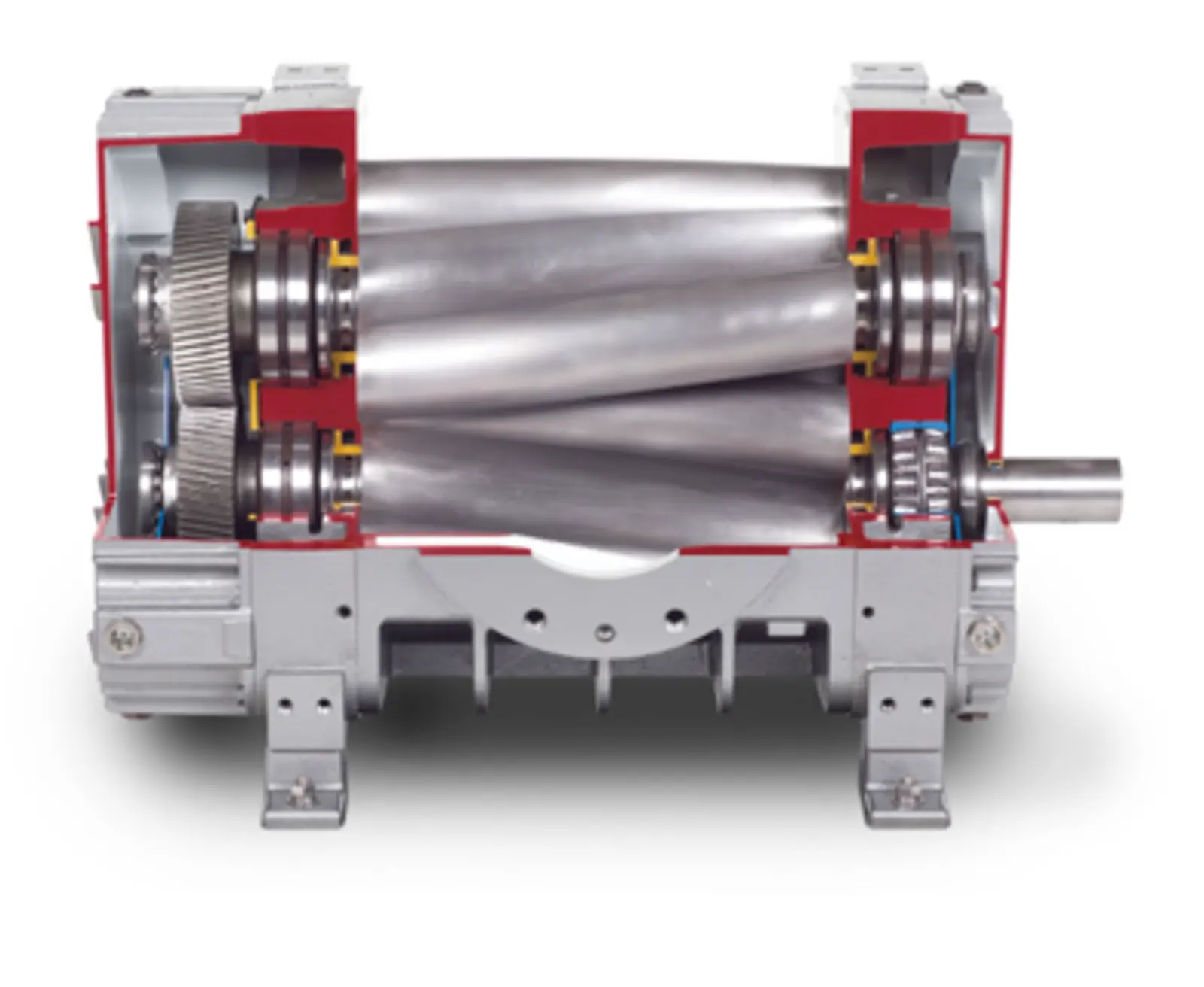
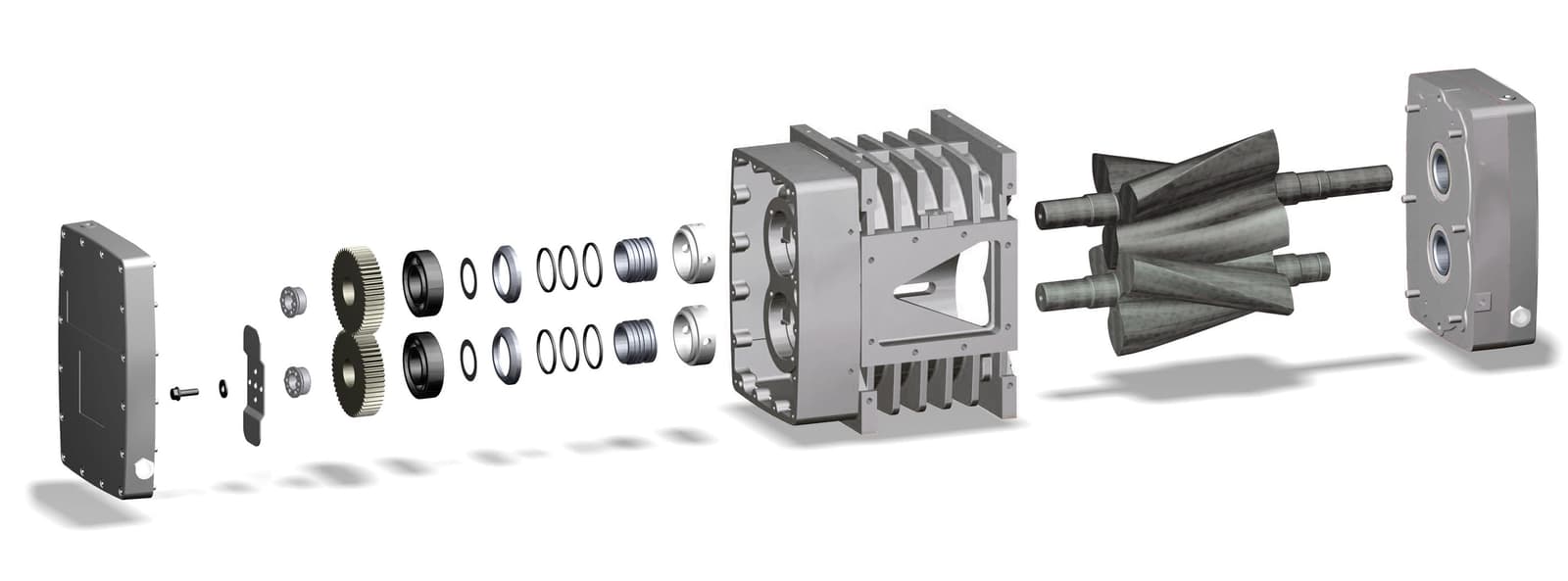
HeliFlow® combines its smooth-running helical rotor profile with design features engineered for demanding industrial operation, including:
- Proprietary helical tri-lobe rotors
- Oversized spherical roller bearings
- Large-diameter shafts
- Dual splash lubrication
- Advanced piston-ring oil and air seals
- One-piece cylinder construction with external cooling fins
Together, these features support the durability, reliability and quieter operation required in industrial blower applications.
Built for a Wide Range of Industrial Applications
HeliFlow® is designed for industrial applications where reliable airflow, reduced pulsation and quieter operation are important considerations.
Typical applications include:
- Wastewater treatment
- Pneumatic conveying
- Milling operations
- Plastics processing
- Carpet cleaning systems
The HeliFlow® Industrial Series delivers airflow up to 4,500 cfm, pressure up to 18 psig and vacuum up to 17 inHg, depending on model selection and operating conditions.
Find the Right Blower for Your Application
Selecting a blower involves more than matching airflow and pressure requirements. Pressure pulsation, sound levels, operating conditions, system configuration and long-term reliability should all be considered when evaluating blower technology.
Whether you are planning a new installation or evaluating an existing system, Gardner Denver blower specialists can help you identify a solution suited to your operating requirements.
Talk with a Blower Specialist
Frequently Asked Questions About Gardner Denver HeliFlow® Blowers
Pressure pulsation occurs as trapped pockets of air are released into the blower's discharge stream. The resulting pressure fluctuations create a repeating pulse pattern as the blower rotates.
Reach Out to Us