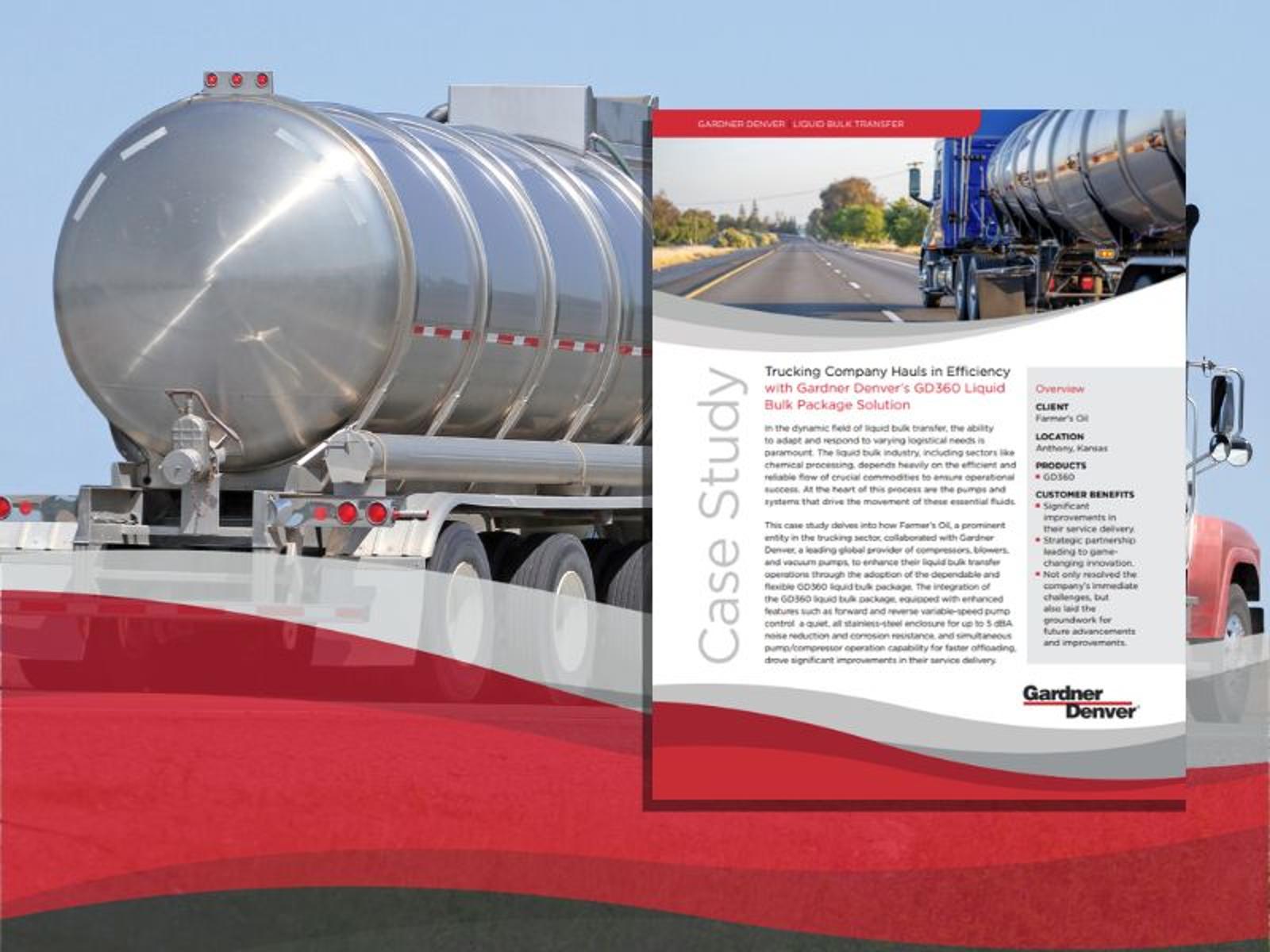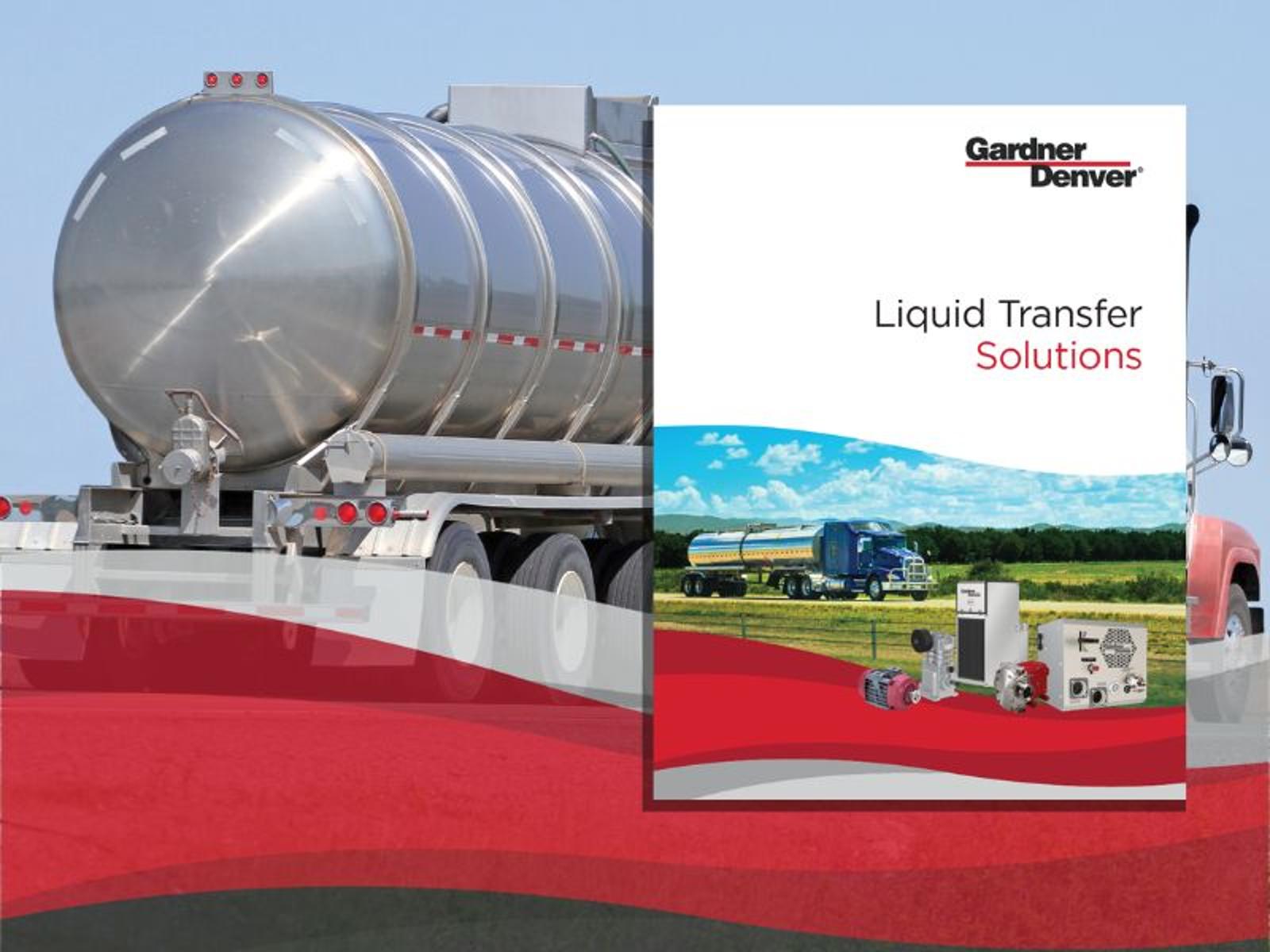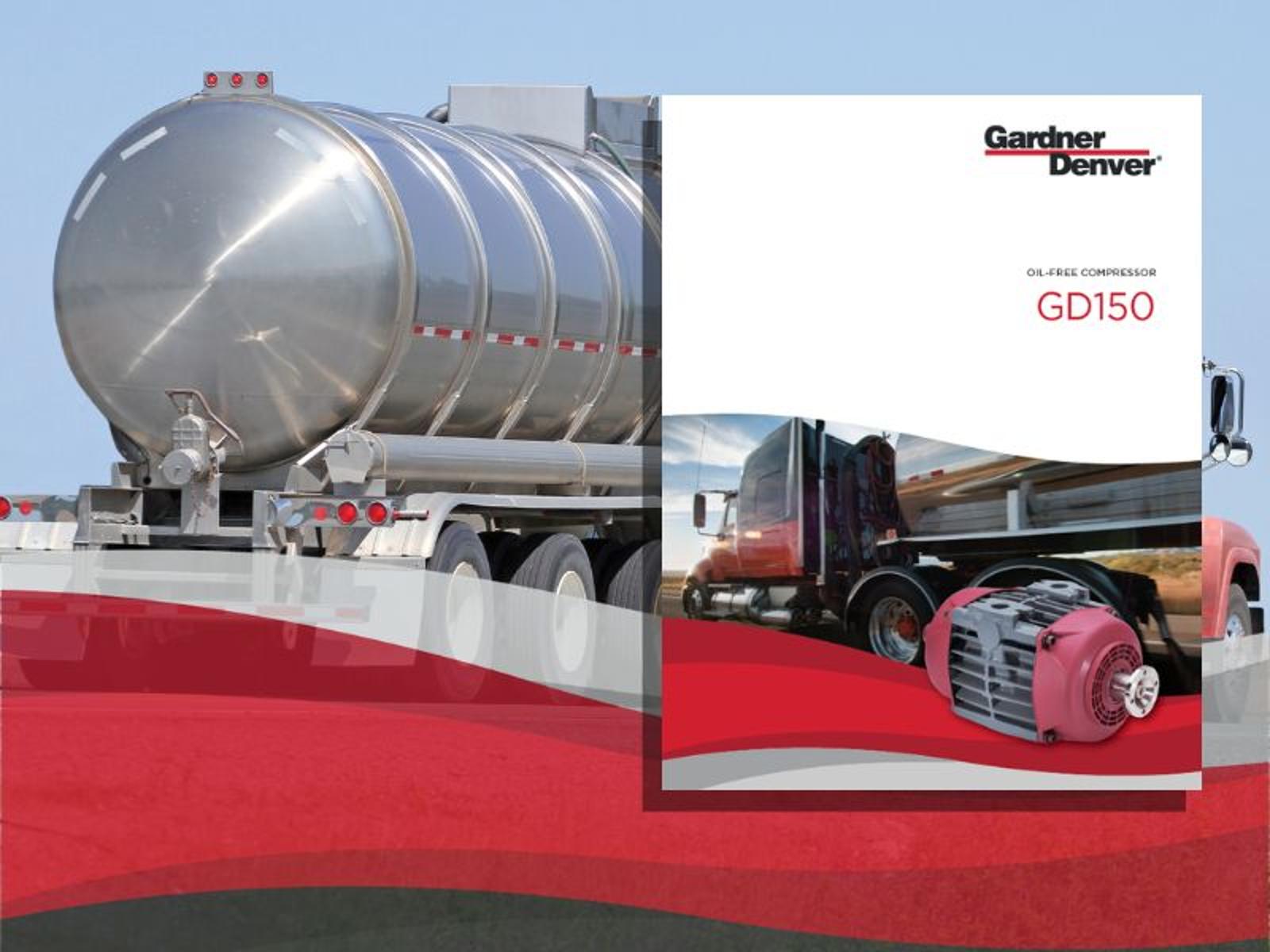

From food-grade transport and chemical transfer to petroleum, resins, and bulk liquid hauling, Gardner Denver engineers liquid bulk transfer technologies specifically around transport applications. Our systems are designed to help customers improve unloading efficiency, simplify installation, reduce maintenance complexity, and maintain reliable transfer performance under demanding operating conditions.

As modern truck chassis become more crowded and liquid transfer operations become more demanding, transport systems must balance airflow performance, contamination prevention, packaging efficiency, hydraulic cooling, and operator simplicity more carefully than ever before.

Improve Liquid Bulk Offload Efficiency

Liquid bulk transfer solutions engineered to help owners and operators maximize offloading performance through reliable airflow, consistent operating pressure, and efficient system operation. 

Protect Product Integrity During Transfer

Rising sanitary standards demand reliable transfer solutions. Protecting product integrity with proven performance and dependable operation that keeps fleets productive and efficient.

Reduce Weight and Preserve Payload Capacity

Integrated liquid bulk transfer solutions help reduce system weight and optimize chassis space, supporting greater payload capacity and improved transport efficiency.

Liquid Bulk Air Compression

Improve Airflow Performance Across Liquid Bulk Applications

Different liquid bulk applications require different approaches to air compression.

Some transfer environments prioritize compact installation and application flexibility, while others require oil-free air delivery for contamination-sensitive products. Operating pressure requirements, transfer distance, product type, operating temperature, and unloading conditions all influence compression system selection.

Efficient air compression technology helps fleets maintain:

  • Reliable unloading performance
  • Consistent delivery
  • Reduced operating temperatures
  • Improved transfer efficiency
  • Long-term system reliability
Specialty Liquids
Reduce Installation Labor

Simplify Installation on Modern Truck Chassis

Modern transport equipment continues becoming more difficult to package efficiently.

Emissions systems, DEF components, batteries, hydraulic equipment, fuel systems, and additional mounted accessories continue reducing available frame rail space across truck chassis. Traditional liquid bulk transfer layouts often require multiple separate components, extensive routing, and significant installation labor.

That complexity creates challenges for:

  • Packaging flexibility
  • Maintenance accessibility
  • System weight
  • Long-term serviceability
  • Installation consistency across fleets

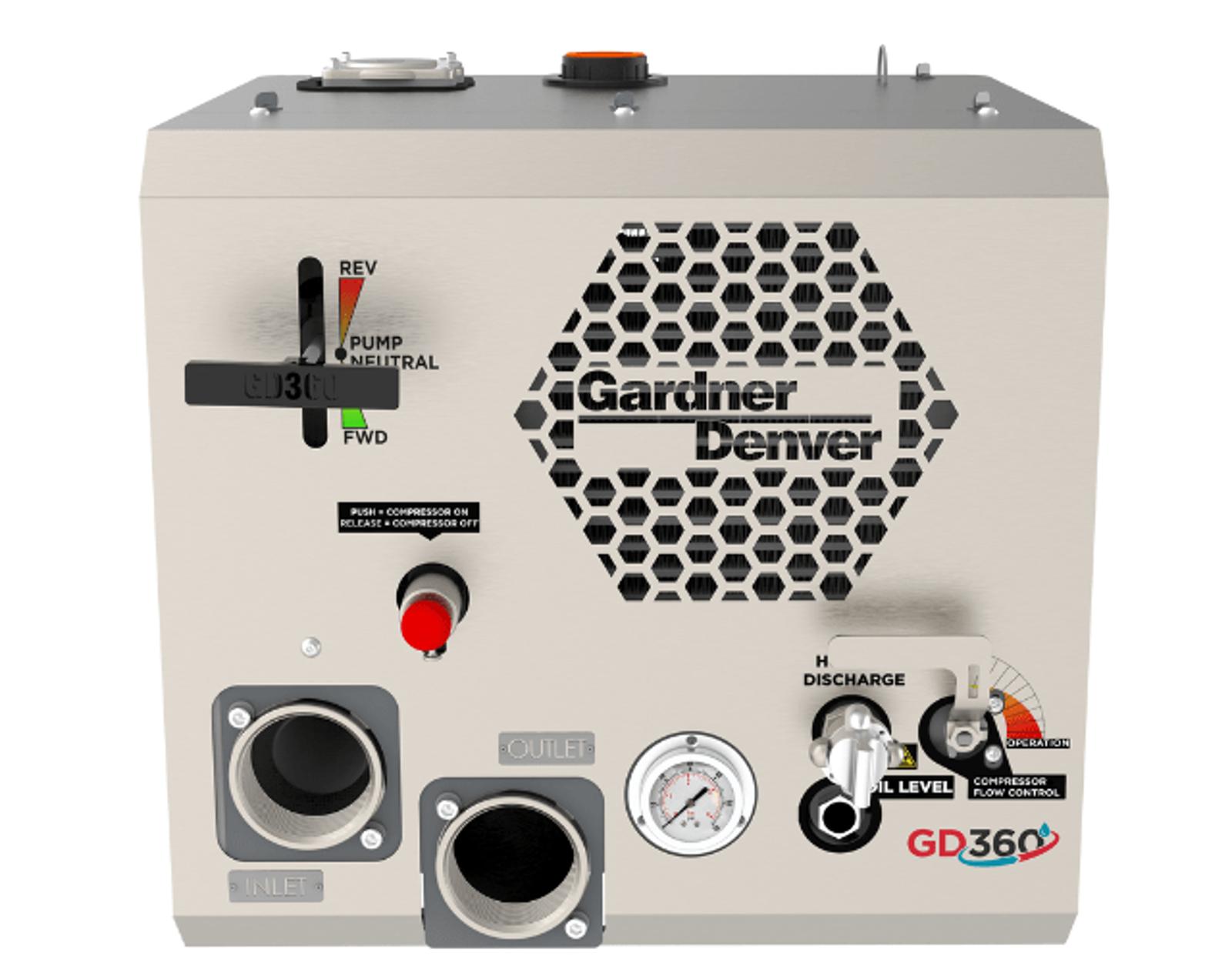
Integrated transfer system design helps simplify installation by reducing overall system footprint while improving packaging efficiency on crowded modern chassis.

Compact all-in-one transfer layouts also help improve maintenance accessibility, simplify operation, reduce installation time, and support more consistent long-term serviceability across transport applications.

GD360 product image

Integrated Transfer Systems vs Traditional Multi-Component Layouts

Operational Priority

Integrated Liquid Bulk Transfer Systems

Traditional Multi-Component Layouts

Installation Simplicity

Compact all-in-one packaging

Multiple separate components and routing

Frame Rail Space Usage

Reduced installation footprint

Larger chassis space requirements

Maintenance Accessibility

Improved service access and simplified layouts

More difficult component access

Payload & Weight Efficiency

Reduced overall system weight

Heavier system layouts

Operator Simplicity

Streamlined operation and controls

More complex operation

Packaging Flexibility

Optimized for modern truck chassis

Less adaptable to crowded layouts

Best Suited For

Modern transport applications

Conventional transfer system layouts

Liquid Bulk Transport

Engineered Around Real Transport Applications

Liquid bulk transfer requirements vary significantly depending on the product being transported, unloading environment, trailer configuration, and operating demands.

Transport applications commonly requiring liquid bulk transfer solutions include:

  • Food-grade
  • Chemical
  • Resin hauling
  • Petroleum
  • Corn syrup
  • Liquid fertilizer applications
  • Bulk liquid tank trailers

Each application places different demands on airflow, sanitary transfer capability, packaging efficiency, hydraulic cooling, contamination prevention, and operator safety.

That is why liquid bulk transfer systems engineered specifically for transport applications continue becoming increasingly important across modern fleets.

Truck

Operational Priority

Integrated Transfer Packages

Oil-Lubricated Liquid Bulk Compressors

Oil-Free Liquid Bulk Compressors

Sanitary Food & Chemical Pumps

Best Suited For

Fleets prioritizing installation simplicity and integrated operation

General liquid bulk and chemical transport applications

Contamination-sensitive liquid transfer applications

Food-grade, sanitary, and chemical transfer

Key Operational Advantage

Simplified packaging and operator-friendly system design

Compact and durable airflow generation

Clean oil-free air delivery

Product integrity and sanitary transfer capability

Installation Simplicity

All-in-one compact system layout

Traditional compressor installation

Compact transport-focused compressor installation

Flexible mounting and transfer integration

Frame Rail Space Efficiency

Reduced installation footprint

Moderate installation footprint

Compact system packaging

Compact transfer pump layout

Payload & Weight Efficiency

Reduced overall system weight

Lightweight transport compressor design

Lightweight corrosion-resistant construction

Compact stainless steel construction

Maintenance Accessibility

Simplified service access and integrated layout

Accessible transport-focused design

Reduced maintenance through oil-free operation

Front-loaded seals simplify maintenance

Liquid Bulk Transport Frequently Asked Questions

Liquid bulk unloading performance is influenced by airflow management, compressor performance, hydraulic efficiency, piping layout, and overall transfer system design. Integrated transfer systems engineered specifically for transport applications help improve unloading efficiency by optimizing airflow performance, simplifying operation, and maintaining more consistent transfer conditions.

Reach Out to Us