
Why Dry Bulk Unloading Performance Matters
.jpg?format=pjpeg&width=1600&quality=75&auto=webp)
Dry Bulk pneumatic conveying operations place constant demands on unloading equipment. Repeated unloading cycles, changing operating conditions, and tight delivery schedules require blower systems that can deliver reliable airflow, pressure, and efficiency day after day.
Extended operating hours, changing climates, repeated unloading cycles, and tight delivery schedules create constant demands on blower systems. In these conditions, performance is no longer measured by airflow alone. Fuel efficiency, unloading speed, operating temperature, reliability, and long-term durability all directly impact operational efficiency.
For decades, Gardner Denver technologies have helped define dry bulk pneumatic conveying across transport applications. From bi-lobe blowers to helical screw and rotary vane compressor technologies, each system was engineered to solve a specific operational challenge found in real-world bulk hauling environments.
Why Dry Bulk Blower Performance Matters
In dry bulk transport operations, even small inefficiencies become expensive over time. Higher discharge temperatures can accelerate component wear. Excessive blower weight reduces payload efficiency. Longer unloading times create delays at terminals and customer facilities. Increased horsepower demand raises fuel consumption across every delivery cycle. This is why blower performance affects much more than unloading speed.
Properly matched pneumatic conveying systems help improve operational consistency, reduce downtime, and extend equipment life across thousands of unloading cycles.
What Causes Slow Dry Bulk Unloading?
Slow unloading times are commonly caused by insufficient airflow velocity, undersized blower systems, excessive line restriction, or improperly matched pressure capability.
Material characteristics also play a major role. Fine powders such as cement or fly ash require stable airflow and controlled pressure to prevent plugging, while pellets and granules often demand higher conveying velocity and efficient pressure discharge.
This is one reason Gardner Denver developed multiple blower technologies rather than relying on a single design for every application. Proper system matching remains one of the most important factors in improving dry bulk unloading performance.
Why Blower Technology Makes a Difference
Not all dry bulk blowers operate the same way. Different technologies are designed to solve different pneumatic conveying challenges.
Bi-Lobe Blowers for Proven Dry Bulk Reliability
Bi-lobe blowers continue to serve as one of the most widely trusted technologies for dry bulk transport.
Gardner Denver Drum Series blowers were engineered for reliable continuous pressure performance across a broad range of applications, including cement, lime, flour, grain, and plastic pellets. Their proven design delivers dependable airflow while maintaining durability in demanding transport environments.
_(1).png?format=pjpeg&width=1600&quality=75&auto=webp)
Why Helical Screw Blowers Improve Fuel Efficiency
Helical screw blower technology was developed to improve airflow efficiency while reducing pulsation, noise, and operating temperature.
Gardner Denver CycloBlowers use a proprietary helical screw rotor design that reduces internal losses and lowers horsepower demand compared to traditional blower technologies. Lower operating RPM and smoother airflow help reduce fuel consumption during unloading while improving overall system efficiency. For fleets performing frequent unloading operations, these fuel savings compound significantly over time.
Helical screw technology also supports efficient pressure discharge and vacuum loading applications.
.png?format=pjpeg&width=1600&quality=75&auto=webp)
Rotary Vane Compressors for Higher Pressure Applications
Some dry bulk materials require higher-pressure unloading capability. Rotary vane compressors such as the HPD450 and E490 are designed for medium- to high-pressure offloading while maintaining cool operating temperatures and quiet operation.
These systems are commonly used for materials such as pulverized limestone, calcium carbonate, fly ash, starch, sugar, flour, and cement where stable pressure performance is critical to unloading efficiency.
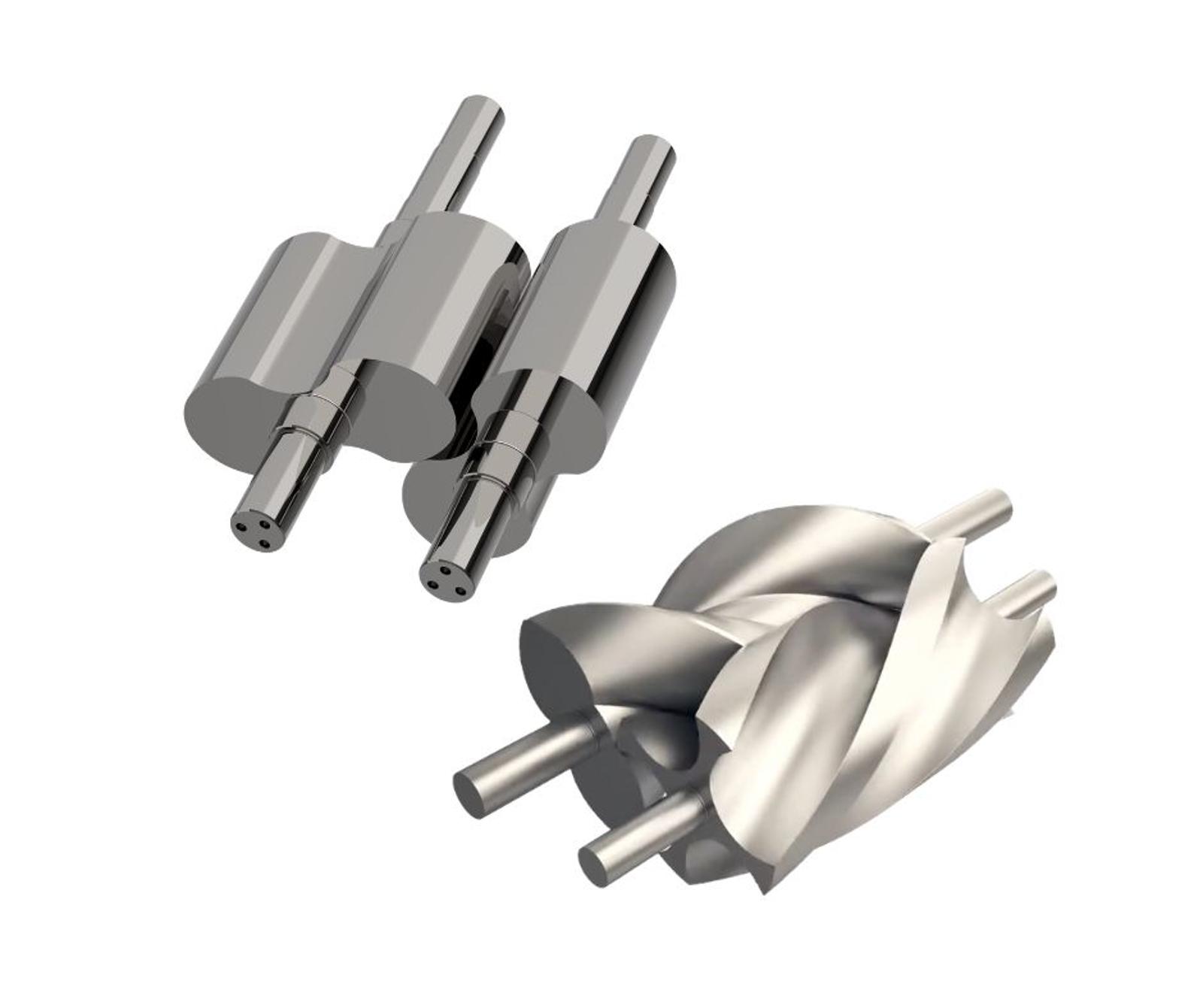
Bi-Lobe vs Helical Screw Blowers
One of the most common pneumatic conveying questions is whether a bi-lobe blower or helical screw blower is the better choice for dry bulk transport. The answer depends on operational priorities.
Bi-lobe blowers are known for durability, simplicity, and reliable continuous airflow across many material types. Helical screw blowers prioritize fuel efficiency, reduced pulsation, quieter operation, and smoother airflow characteristics.
Gardner Denver engineered both technologies because different dry bulk applications require different airflow and pressure solutions.
Why Operating Temperature Matters in Pneumatic Conveying
Excessive blower temperature is one of the leading causes of reduced efficiency and premature component wear during dry bulk unloading.
High operating temperatures can increase lubricant breakdown, stress internal components, and reduce overall system life. This is why Gardner Denver focused heavily on technologies that reduce heat generation through improved airflow efficiency, reduced internal losses, and hydraulic cooling innovations. Cooler operation improves reliability during repeated unloading cycles and demanding long haul conditions.
Why Proper Blower Selection Improves Reliability
Blower selection directly affects conveying velocity, unloading time, operating temperature, fuel efficiency, and long-term reliability. An undersized blower may struggle to maintain airflow, increasing unloading times and risking line plugging. An oversized system can create unnecessary heat, excessive horsepower demand, and additional component stress.
Compare technologies, review performance specifications, and better understand how blower selection impacts unloading speed, fuel efficiency, and long-term reliability.
.png?format=pjpeg&width=1600&quality=75&auto=webp)
FAQs
The best blower depends on material density, unloading distance, pressure requirements, and conveying method. Fine powders, pellets, granules, and abrasive materials all require different airflow and pressure characteristics. Gardner Denver developed multiple blower technologies specifically to match these different operating conditions.
Reach Out to Us