
True Cost of Compressed Air Systems
Understanding where costs originate and how they compound over time, helps organizations make smarter decisions that reduce energy spend and improve system performance.
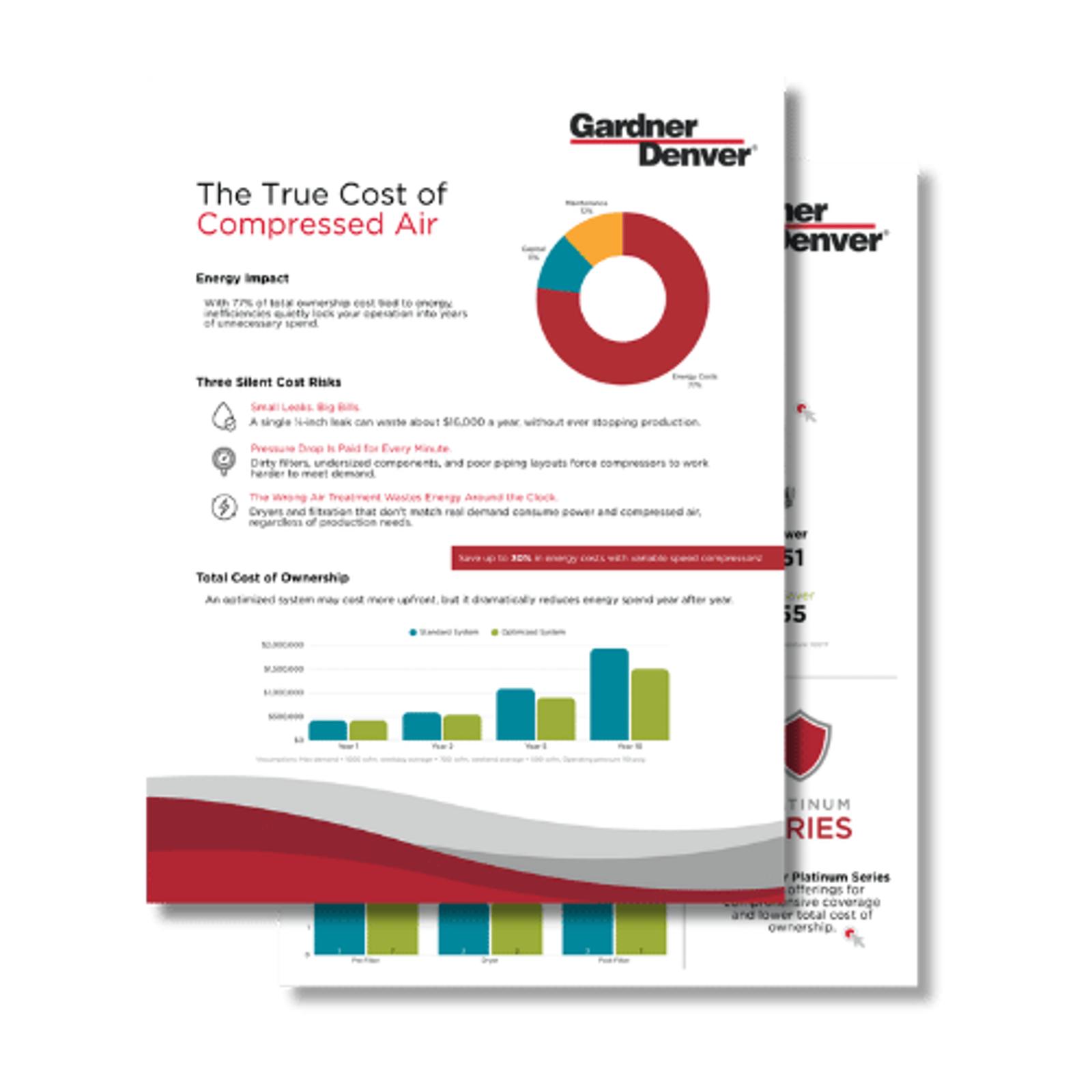
Energy Is the Largest Cost Driver
Energy accounts for 77% of the total cost of ownership of a compressed air system. Once inefficiencies are built into a system, they can lock an operation into years of unnecessary energy spend.
The remaining ownership costs typically include:
- Maintenance (12%)
- Capital costs (11%)
Because energy dominates lifecycle cost, even small inefficiencies can have a significant financial impact over time.
Three Silent Cost Risks in Compressed Air Systems
1. Small Leaks, Big Bills
A single ¼‑inch leak can waste up to $16,000 per year in compressed air.
2. Pressure Drop Is Paid for Every Minute
Dirty filters, undersized components, and poorly designed piping layouts force compressors to work harder to meet demand.
3. The Wrong Air Treatment Wastes Energy Around the Clock
Dryers and filtration systems that do not match actual demand consume power and compressed air regardless of production needs.
Drying Compressed Air: Understanding 3‑Year Energy Spend
Drying technology selection has a measurable impact on operating costs. At an energy rate of $0.10 per kWh, the infographic compares three dryer types over three years:
- Heatless Dryer: $80,300
- With energy saver: (see infographic)
- Heated Dryer: $56,200
- With energy saver: (see infographic)
- Heated Blower Dryer: $52,351
- With energy saver: (see infographic)
Always‑on energy‑saving modes can significantly reduce the operating cost of desiccant dryer systems.
Filtration Matters
Filtration directly affects pressure loss—and pressure loss increases energy usage. The infographic shows that:
- Every 2 PSI of pressure drop increases electrical power by approximately 1%
- Poorly maintained filters can create significantly higher pressure drops than well‑maintained systems
- An additional 8 PSI of pressure drop can add over $4,000 per year in energy costs
Maintaining filters and selecting properly sized filtration reduces both energy consumption and long‑term operating expenses.
Total Cost of Ownership Over Time
While an optimized compressed air system may cost more upfront, the infographic demonstrates that it dramatically reduces energy spend year after year. Over a 10‑year period, optimized systems show substantially lower cumulative operating costs compared to standard system designs.
The takeaway: upfront optimization pays back through sustained energy savings and lower lifetime costs.
Even small leaks run continuously and can waste thousands of dollars per year in energy, increasing compressor runtime without adding production value.
Reach Out to Us