
-min.jpg?format=pjpeg&width=1600&quality=50&auto=webp)
Why Choose Gardner Denver Blowers
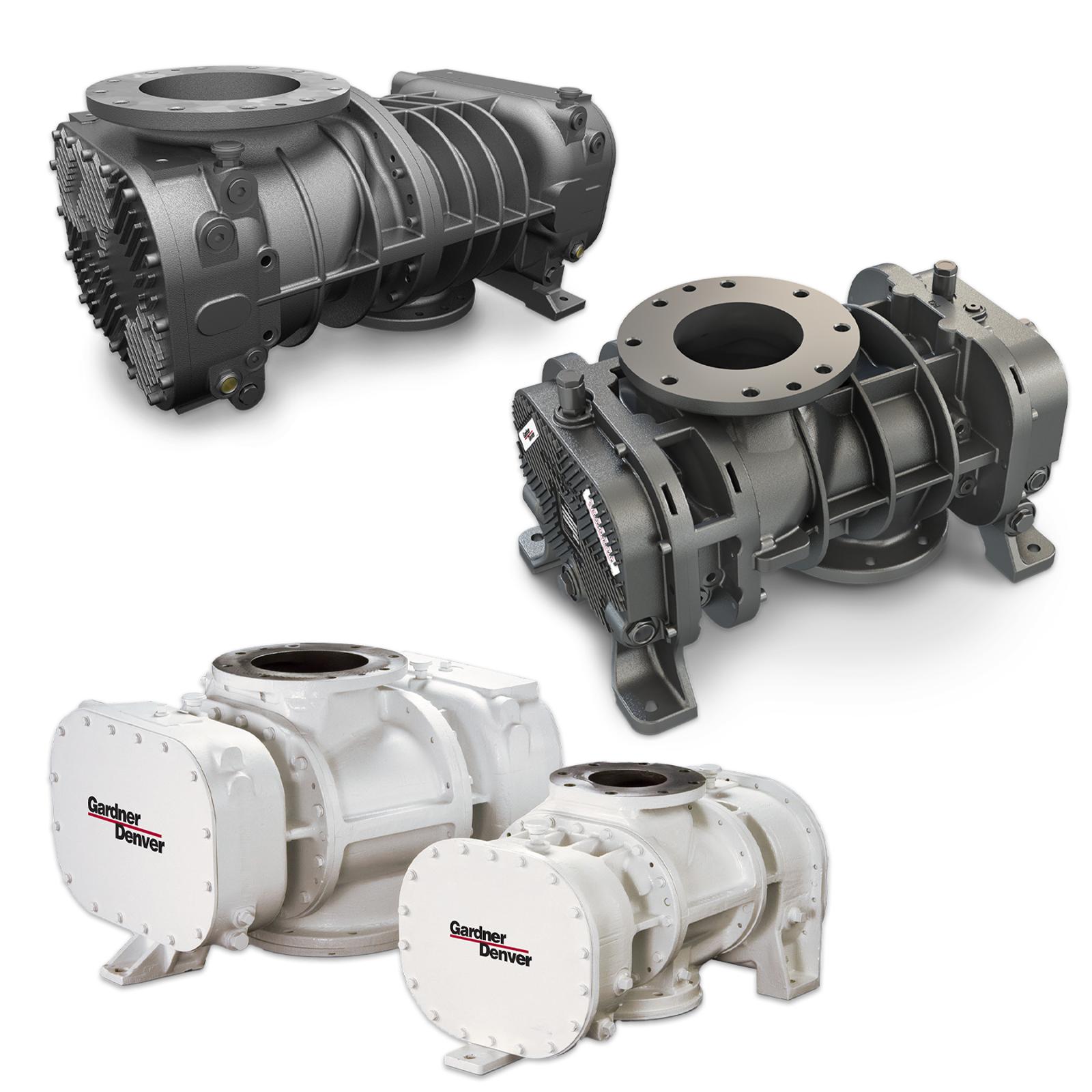
Proven PD blower technologies
Straight bi-lobe, tri-lobe, twisted tri-lobe, and helical screw designs for a wide range of operating conditions
Clean, oil-free airflow
Contactless rotor designs deliver reliable air or gas movement without contamination
Flexible deployment options
Available as standalone blowers for replacement or complete engineered blower packages
Global installed base with service support
Backed by a network of regional service providers for lifecycle support
Common Types of Positive Displacement Blowers
Positive displacement blowers share core advantages, including contactless rotor design for oil-free airflow, reliable operation, and installation of flexibility across industrial environments.
Blower Technologies
Positive displacement blowers operate by moving a fixed volume of air or gas from inlet to discharge, making them a reliable solution for a wide range of industrial processes.
Within this category, Gardner Denver offers several blower technologies, each designed to balance airflow performance, noise, durability, and efficiency based on application requirements.
Positive Displacement Blower Packages
Gardner Denver’s complete line of positive displacement blower packages is engineered for durability, efficiency, and quiet operation. Whether for wastewater treatment, pneumatic conveying, or industrial processing, these packages deliver consistent performance across a wide range of applications.
Available in simple, smart, and high-efficiency configurations, blower packages reduce installation complexity while standardizing performance across operations.
Gardner Denver’s IQ, IQ-RB, and IQ-HE blower packages can be configured with straight bi-lobe, straight tri-lobe, twisted tri-lobe, or helical screw technologies depending on application requirements.
Typical applications:
Used across wastewater systems, pneumatic conveying installations, and facility upgrades requiring integrated blower solutions.
Packages can be configured for a wide range of applications depending on blower technology, control requirements, and site conditions.
_(2)_(1).png?format=pjpeg&width=1600&quality=75&auto=webp)
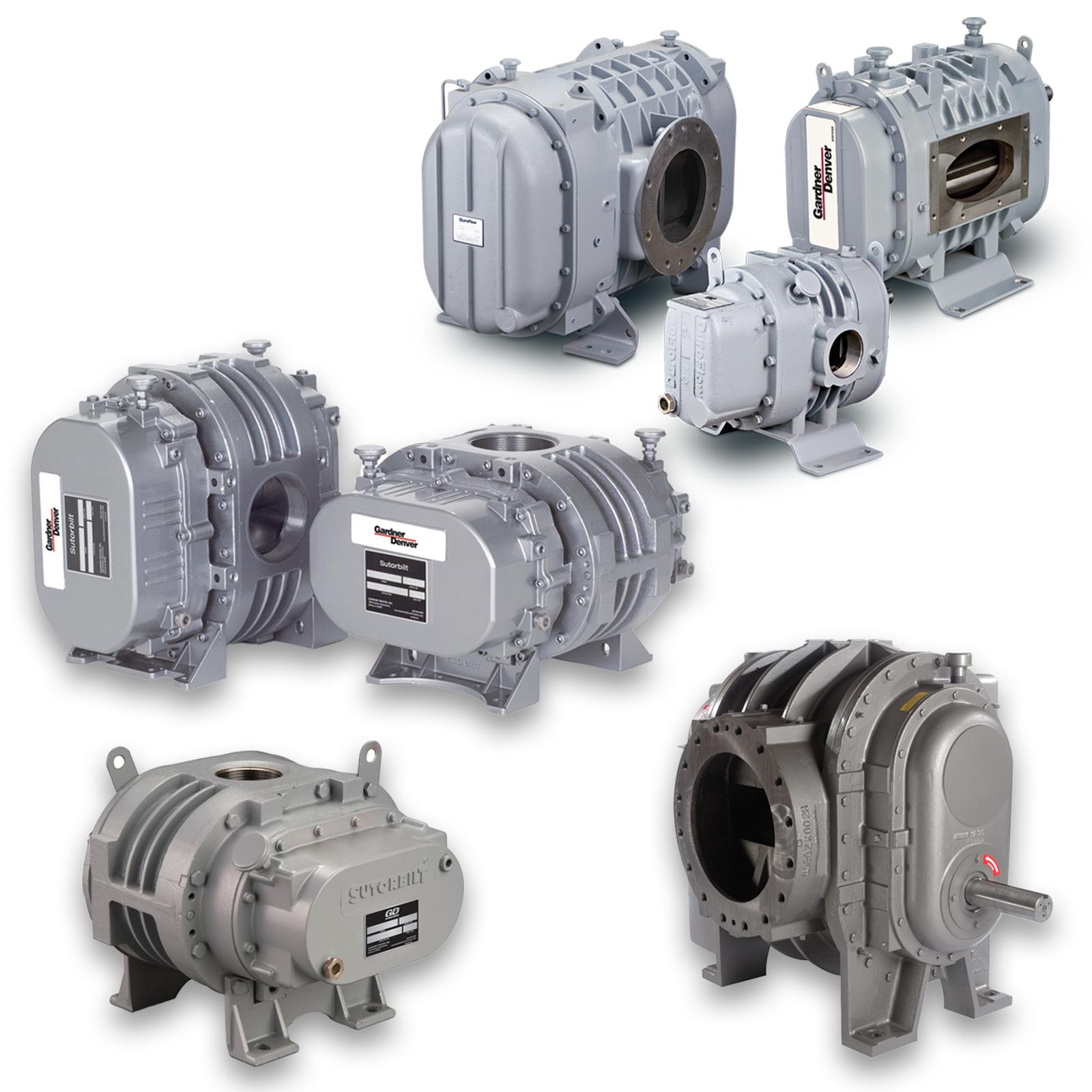
Straight Bi-Lobe
Straight bi-lobe blowers use two figure-eight rotors to move air or gas through the system. This simple and proven design is widely used across industrial applications where durability and consistent airflow are the primary requirements.
Because of their robust construction and ability to operate in demanding conditions, straight bi-lobe blowers are often selected for applications particularly in environments where dust, debris, or continuous operation are factors.
Gardner Denver’s straight bi-lobe portfolio includes the Sutorbilt Legend®, Sutorbilt 4500/4800 Series, Sutorbilt 8000 Series, and DuroFlow®, each designed to deliver reliable performance across a broad operating range.
Typical applications:
Commonly used across wastewater treatment, pneumatic conveying, and general manufacturing processes.
Positive displacement blower technologies can be applied across a wide range of industries; final selection depends on airflow requirements, operating conditions, and system configuration.
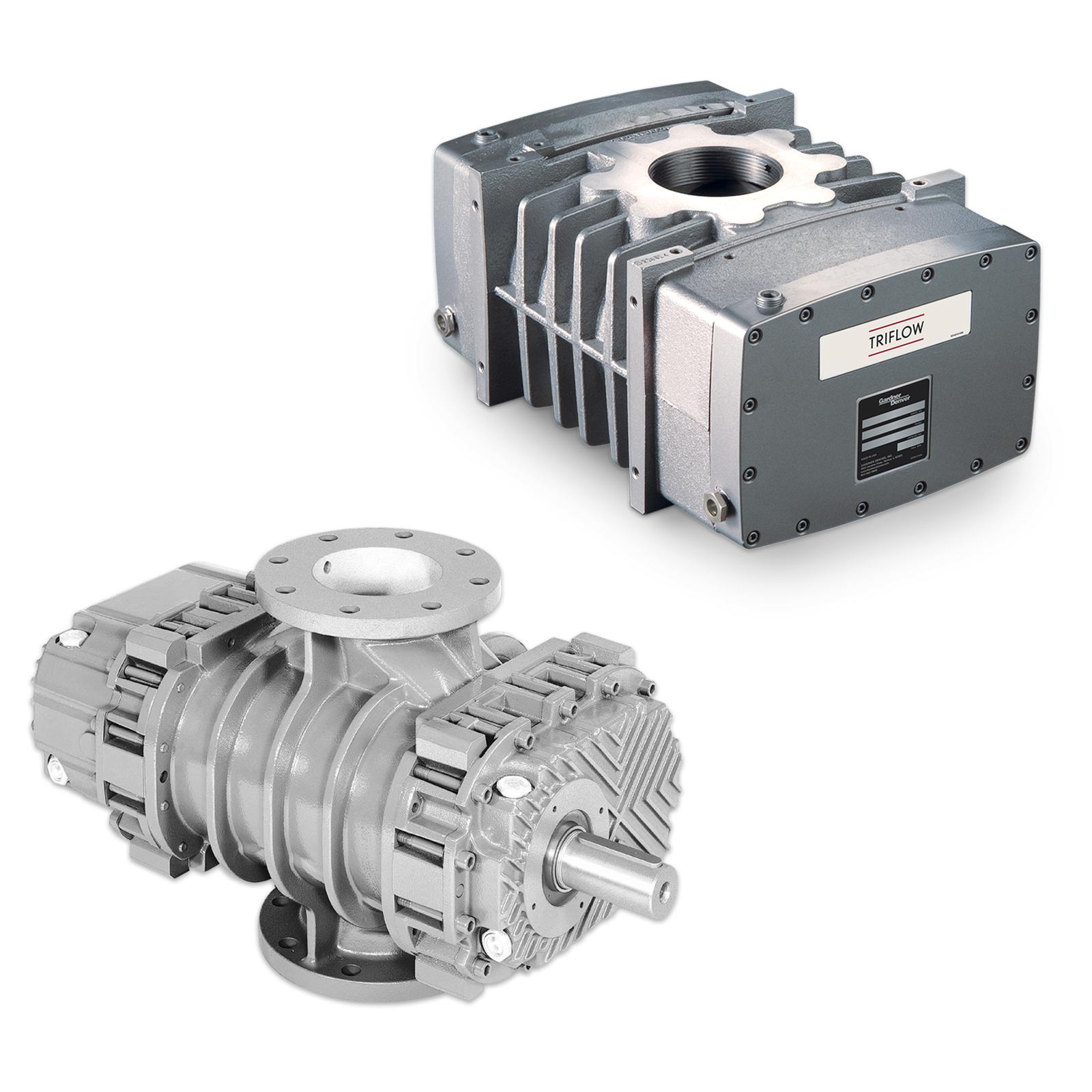
Straight Tri-Lobe
Straight tri-lobe blowers build on traditional lobe technology by introducing a third lobe into the rotor design. This change improves airflow characteristics by reducing pulsation and lowering sound levels compared to bi-lobe designs.
The result is smoother airflow and more stable operation, making straight tri-lobe blowers a strong fit for applications where consistent performance and reduced vibration are important for system reliability.
Gardner Denver straight tri-lobe blowers include the Tri-Lobe Legend Series RBS Series, TriFlow® Series, and GD-DV blowers, providing options across a range of airflow and operational requirements.
Typical applications:
Frequently used in pneumatic conveying, wastewater treatment, and process air applications where reduced pulsation supports system performance.
Application fit can vary based on system requirements, including pressure, flow, and noise considerations.
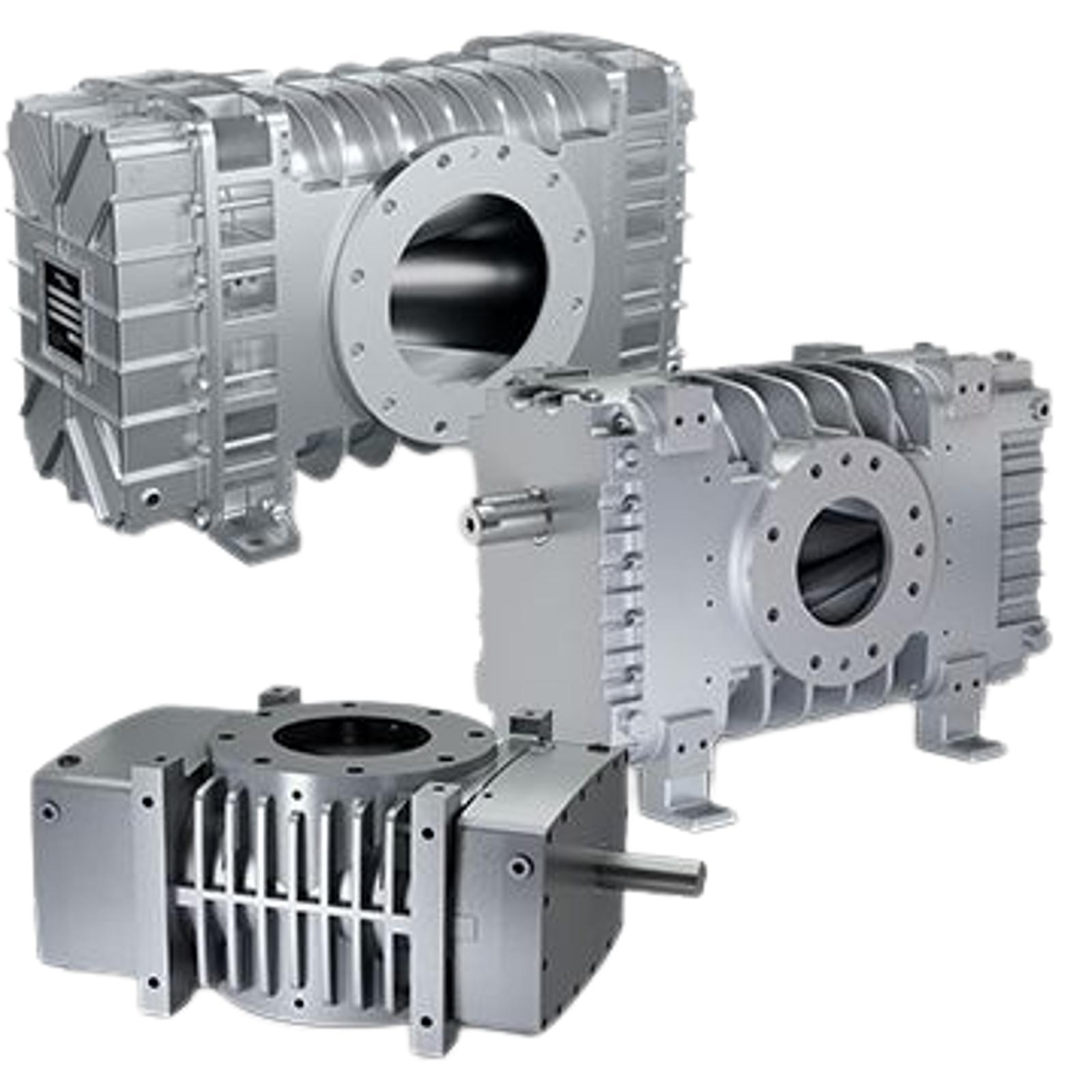
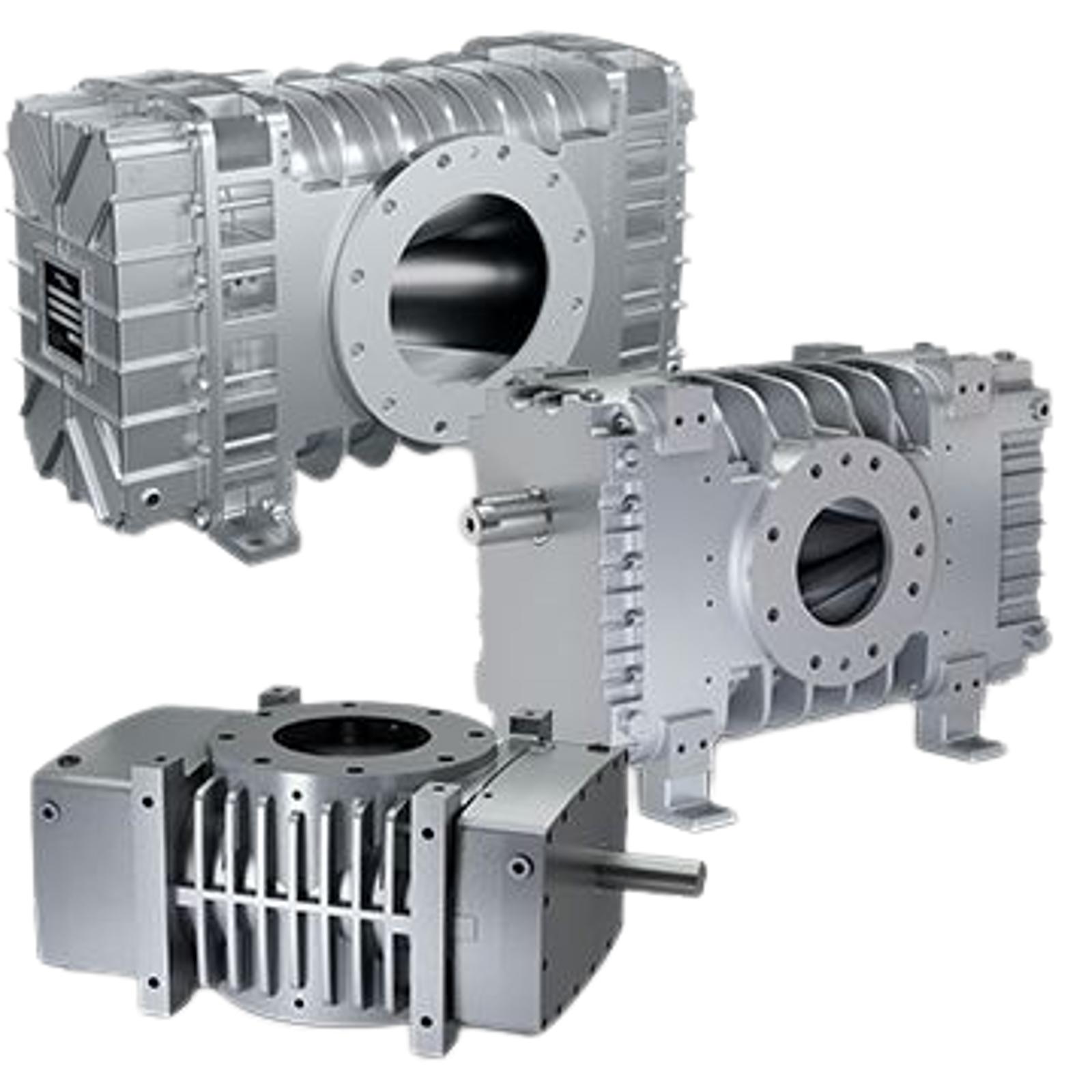
Twisted Tri-Lobe blowers
Twisted tri-lobe blowers use a helical lobe design to further refine airflow characteristics beyond straight lobe technologies. This geometry creates smoother pulse operation, helping reduce pressure fluctuations and extend the life of internal components such as bearings.
By lowering pulsation and noise levels, twisted tri-lobe blowers are often used in applications where system stability, noise control, and long-term reliability are key considerations.
The Gardner Denver HeliFlow® Series represents this technology, offering improved operational performance compared to traditional straight lobe designs.
Typical applications:
Used in wastewater treatment, food and beverage processing, and manufacturing environments where reduced noise and smoother airflow are important.
These applications represent common use cases, but blower selection should be based on specific process and site requirements.
Helical Screw Blowers
Helical screw blowers use a screw-type rotor design to compress and move air or gas efficiently through the system. This approach differs from traditional lobe technologies by introducing a continuous compression process, which supports improved energy performance.
These blowers are often selected in applications where energy efficiency is a priority, particularly in processes with defined operating ranges or continuous-duty cycles.
Gardner Denver helical screw solutions include the CycloBlower® Industrial Series, CycloBlower® H.E. Series, and CycloBlower® VHX Series, all designed to support efficient, consistent airflow across industrial applications
Typical applications:
Often applied in wastewater treatment, chemical processing, and industrial operations where energy efficiency is a key consideration.
Actual application suitability depends on operating range, system control needs, and performance targets.
How to Choose the Right Positive Displacement Blower
Selecting the right blower starts with understanding the application and the role the blower plays within the process.
Rather than beginning with product selection, the process should focus on the operating conditions, performance requirements, and environment in which the blower will be used.
Start with the Application
Every blower is selected to perform a specific task, whether that is conveying materials, supporting aeration, or moving air or gas through a process.
Understanding the application helps define:
- What the blower is required to do
- The type of air or gas being handled
- How the system operates in real conditions
This step provides the foundation for all other decisions.
Define Performance Requirements
Once the application is clear, the next step is to define the performance requirements of the system.
Key factors include airflow and pressure, which determine the capacity and operating range needed for the blower.
It is important to consider both average operating conditions and peak demand to ensure the blower performs consistently across the full range of operation.
Evaluate Operating Conditions
Environmental and operating conditions have a direct impact on blower performance and longevity.
Factors such as temperature, altitude, humidity, and available installation space can influence how a blower is sized and configured.
In more demanding environments, additional considerations such as chemical exposure or material compatibility may also be required to ensure reliable operation over time.
Consider Efficiency and Lifecycle Performance
Blower selection is not only about meeting initial requirements, but also about long-term performance.
Energy efficiency, maintenance needs, and reliability all play a role in total cost of ownership.
Selecting a blower that aligns with both operational and lifecycle requirements helps reduce downtime and improve overall system performance.
Use a Structured Selection Process
A structured approach helps narrow the available options quickly and ensures the selected blower aligns with real operating conditions.
Need help selecting the right blower?
Because many technologies can support similar applications, the best fit depends on your system requirements. Contact a Gardner Denver blower expert or explore the Blower Selection Guide for a structured approach to selection.
Parts, Service, and Lifecycle Support
Industrial blower performance extends beyond initial selection.
Ongoing maintenance, inspection, and service access play a critical role in system reliability, including repair, upgrades, and performance optimization of installed equipment.
Support across blower parts, service, and maintenance helps ensure long-term performance and equipment availability across operating environments.
Industrial Blower FAQs
In many industrial applications, multiple blower technologies can be used to achieve similar outcomes. The difference typically comes down to airflow characteristics, noise levels, energy efficiency, and system preferences rather than the application itself.
For example, both rotary lobe and helical screw blowers may be used in wastewater treatment or pneumatic conveying, but the best choice depends on operating conditions and performance priorities.
Reach Out to Us